April 17, 2026
From industrial zones to economic engines: How AD Ports Group is redefining regional growth
There was a time when economic zones were little more than fenced pieces of land with infrastructure and incentives attached. Investors came, built, and operated in relative isolation. That model worked until it stopped working. Today, the rules are different. Across the UAE, and particularly in Abu Dhabi, economic cities and free zones have evolved […]
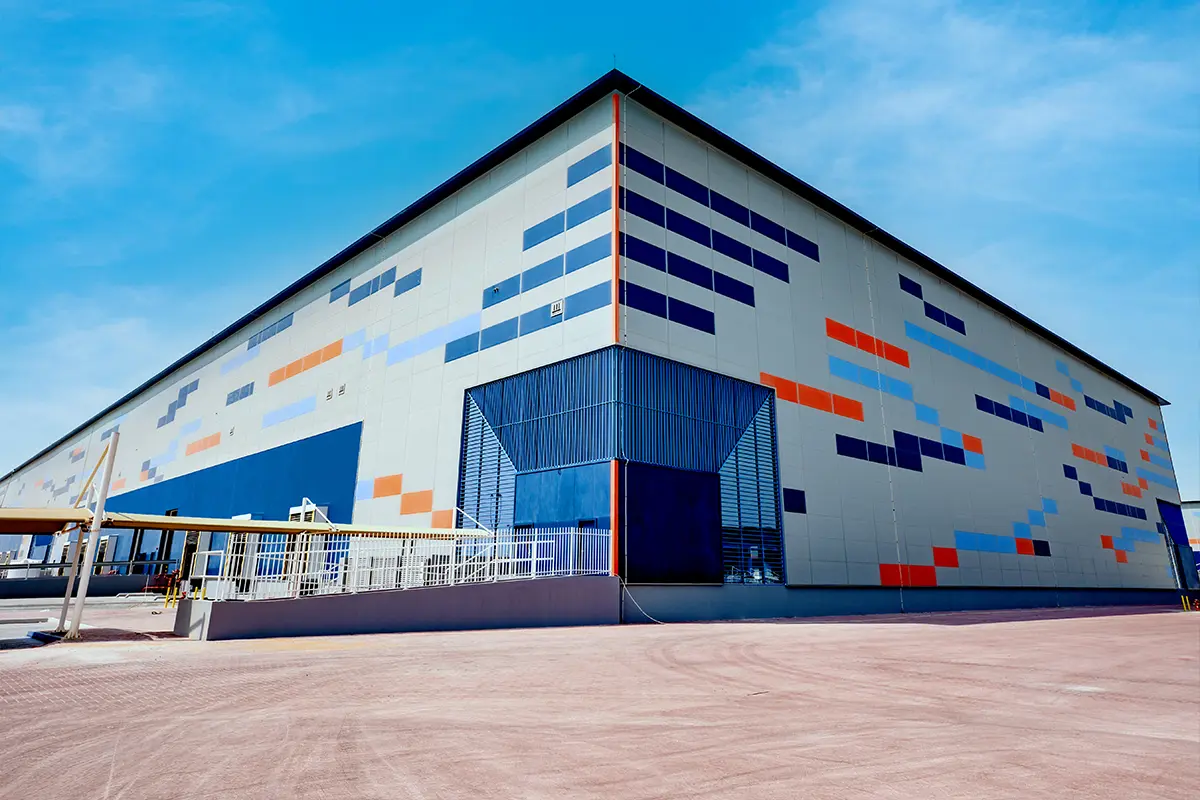
There was a time when economic zones were little more than fenced pieces of land with infrastructure and incentives attached. Investors came, built, and operated in relative isolation. That model worked until it stopped working.
Today, the rules are different.
Across the UAE, and particularly in Abu Dhabi, economic cities and free zones have evolved into something much more sophisticated: integrated ecosystems designed not just to host industry, but to coordinate it. At the center of this transformation sits AD Ports Group and its Economic Cities & Free Zones (EC&FZ), anchored by KEZAD Group, which has quietly become one of the most significant drivers of non-oil economic growth in the region.
Numbers give only part of the real story. In 2024, AD Ports Group supported an estimated AED170 billion in GDP contribution to Abu Dhabi, equivalent to 24.4 percent of the emirate’s non-oil economy. Remarkably, EC&FZ alone accounted for the overwhelming majority of that impact, contributing AED158 billion, around 22.7 percent of non-oil GDP, and supporting more than 370,000 jobs.
But these numbers alone don’t explain the shift. The real story lies in how this value is being created.
KEZAD Group is no longer simply an industrial zone. It is an operating system for trade.
Spread across a 570 km² land bank and connected to ports, logistics networks, and digital platforms, KEZAD Group integrates every stage of the value chain, from production and storage to transport and export. The result is not just efficiency, but speed. Goods move faster. Capital turns quicker. Decisions scale more effectively.
There is a simple question to ask: what is more valuable today, a factory sitting on isolated land, or one embedded in a system where raw materials arrive seamlessly through a port, production is supported by nearby logistics, and finished goods are dispatched globally within hours?
This distinction is where competitive advantage now lives.
This integrated model is also reflected in AD Ports Group’s financial performance. In 2025, the Group delivered its strongest results to date, with revenue rising 20 percent year-on-year to AED20.76 billion, EBITDA reaching AED5.07 billion, and net profit surpassing AED2 billion. These are not incremental gains. They are signals of a system scaling efficiently across multiple dimensions.
EC&FZ itself recorded standout growth, with revenues increasing by 45 percent year-on-year, driven by strong demand for industrial land, logistics assets, and integrated services.
Yet perhaps the most telling development is not growth, it is transformation.
KEZAD Group is redefining its own business model. Traditionally anchored in long-term land leases, it is now introducing a hybrid approach that includes land sales, built assets, and capital recycling. High-profile transactions, such as the sale of 4.6 km² of land for AED2.47 billion to Mira Developments, alongside a 1 km² land sale to Danube for AED840 million, are not just financial events. They signal a deliberate shift toward unlocking embedded value, accelerating mixed-use development, and reinvesting capital into future capacity. This is where the narrative becomes more interesting.
The rise of the economic cities
The evolution of KEZAD Group is no longer limited to industry. It is extending into community.
By enabling residential and commercial developments within its ecosystem, KEZAD Group is moving toward a “live-work-play” model, an idea that might sound familiar in urban planning, but is now being applied to industrial strategy. Why? Because talent does not operate in isolation. Skilled workers, engineers, and operators require proximity, quality of life, and connectivity just as much as factories require infrastructure.
Industrial zones are becoming economic cities in the truest sense.
This shift aligns closely with Abu Dhabi’s broader economic trajectory. Since the launch of the Abu Dhabi Industrial Strategy, industrial GDP has grown significantly, supported by policies focused on advanced manufacturing, supply chain resilience, and foreign direct investment. The ecosystem is not evolving by accident; it is being engineered one step at a time, and all at once.
And KEZAD Group sits at the center of that engineering.
In the broader context, global supply chains are being rewritten in real time. Geopolitical developments, trade realignments, and regionalization are forcing companies to rethink where and how they operate. The “China+1” strategy is no longer theoretical. It is operational. Companies are actively diversifying production bases, and regions that offer integrated, efficient, and scalable ecosystems are winning.
The UAE, and Abu Dhabi specifically, is positioning itself as one of those destinations.
AD Ports Group’s vertically integrated model, spanning ports, economic zones, maritime services, and logistics, creates a level of control and coordination that few global players can replicate. It is not just infrastructure. It is orchestration.
And that orchestration is what transforms an industrial zone into a hub for economic development.
This has clear, if not always comfortable, implications for investors. The time of passive industrial real estate is ending. Owning land is no longer enough. Value is created through connectivity, integration, and participation in a broader ecosystem.
For businesses, the shift carries equal weight. Location decisions are not about cost alone anymore. They are about access to markets, access to supply chains, access to talent, and more than ever, access to entire economic systems.
For policymakers, the lesson is even sharper. Competitiveness cannot be built through isolated initiatives any longer. It requires coordinated platforms where infrastructure, regulation, and investment align.
Read| Implications of the latest US tariffs: What Middle East businesses need to brace for
So where does all this lead?
As we look to the future, KEZAD Group’s trajectory points toward deeper integration, both geographically and operationally. International expansions, such as our development of KEZAD East Port Said in Egypt, suggest that the model is not confined to Abu Dhabi. It is exportable.
At the same time, digitalization and sustainability will continue to define the next phase of growth. With over 200 AI agents already deployed across operations and a growing focus on low-carbon infrastructure, AD Ports Group is positioning itself not just as a participant in global trade but as a shaper of its future.
The question, then, is not whether economic zones will evolve. They already have. The real question is whether stakeholders, investors, businesses, and governments are evolving with them.
Because in this new landscape, value does not sit in land. It moves through networks.
And the hubs that can capture, direct, and scale those flows, like KEZAD Group, will define the next chapter of economic development in the region.…Read more by