May 5, 2026
19 tips for how to get the most out of a tank of gas
With the recent spike in gasoline prices, drivers throughout the region are looking for ways to maximize their fuel economy and save money at the gas pump. With gas prices rising alongside other everyday expenses, finding small ways to save on fuel can make a meaningful difference over time. Experts from Consumer Reports and AAA […]
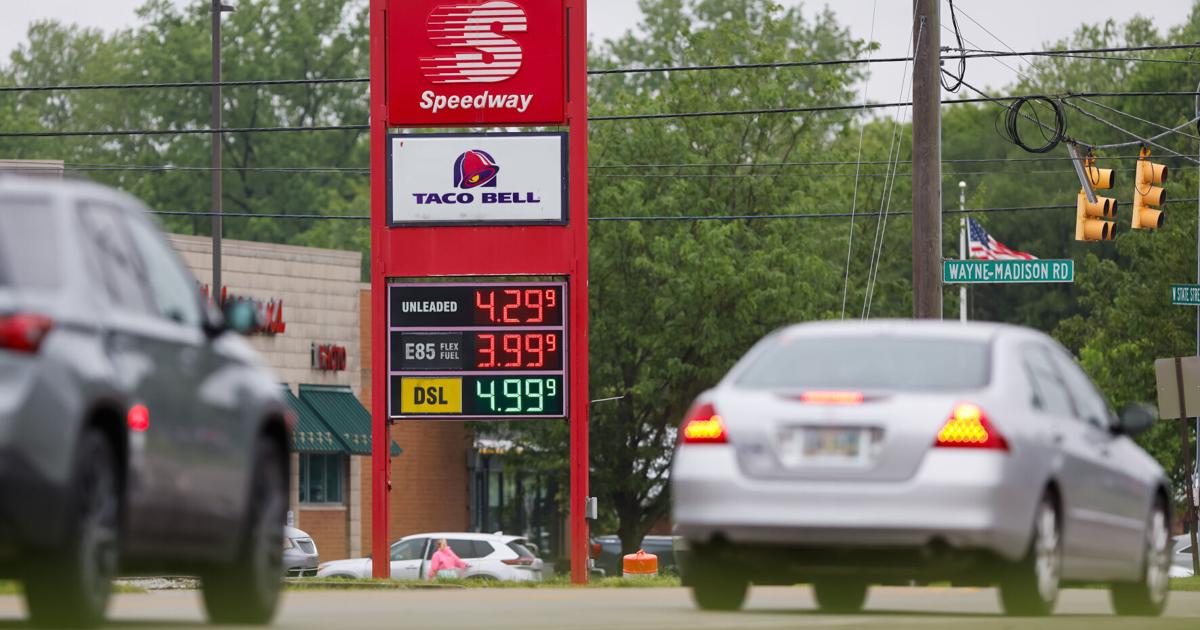
With the recent spike in gasoline prices, drivers throughout the region are looking for ways to maximize their fuel economy and save money at the gas pump.
With gas prices rising alongside other everyday expenses, finding small ways to save on fuel can make a meaningful difference over time.
Experts from Consumer Reports and AAA have been pulling together a variety of tips to help us out.
Here are some practical ways to help cut fuel costs, including smarter driving, better planning, and indispensable savings tools.
1. Shop for the best prices: Sometimes the low fuel light surprises you, causing you to stop at the nearest station. But other times, you can plan to fuel up wisely by using tools like the AAA Gas Price Finder or Gas Buddy, which locate inexpensive gas near you, wherever you are.
2. Use credit card perks: Many credit cards have rewards programs that offer cash back, points, or miles on certain purchases. While some offer a flat rate, like 1% or 1.5%, on all purchases, others have bonus categories that offer more rewards. Oftentimes, gas is included in those bonus categories. You could earn up to 5% or more rewards using your credit card each time you go to the pump.
3. Avoid aggressive driving: Aggressive driving habits, such as sudden braking or rapid acceleration, can reduce fuel economy by 15 to 30 percent, according to the US Department of Energy. Smooth acceleration helps your vehicle use just enough fuel to reach speed, while coasting and gently applying the brakes to slow down conserve momentum, reducing the amount of gas needed to accelerate again.
4. Avoid traffic: Few things are worse for your miles per gallon than sitting in stop-and-go traffic. The constant acceleration, stopping, and idling consume far more fuel than driving at a steady speed. Whenever possible, plan your routes to avoid traffic or limit trips during peak traffic hours.
5. Roll up the windows: It may seem counterintuitive, but running the air conditioner is often more fuel-efficient than driving with the windows down. At higher speeds, open windows create enough aerodynamic drag and wind resistance to reduce your mpg. If you’re driving at a speed of more than 50 mph, roll up the windows, and turn on the A/C, if necessary—it’s actually more fuel-efficient.
6. Check out gas station loyalty programs: Some gas stations and grocery stores have loyalty programs that give you discounts at the pump for buying stuff you have to buy anyway. Typically, these are completely free; all you must do is make purchases as you normally would (on groceries, gas, or convenience store items) to get a discount per gallon. In some cases, you might have to sign up for the rewards card, but it’s almost always worth it.
7. Combine errands or short trips: Stop at the grocery store on your way home from work, or run to the post office after you drop off the kids at school. Prep meals and make lists before you go shopping to ensure you get everything you need in one trip. The fewer trips you make running errands, the less you’ll pay in gas.
8. Keep your tires inflated: Underinflated tires can actually hurt your gas mileage. In fact, for every 1 psi missing from your car’s set of tires, you lose 0.1% of your gas mileage, according to the US Department of Energy. Each psi lost also means your tires wear 10 times faster. By properly inflating your tires, you can improve your gas mileage by 3.3% or more.
9. Lighten your load: According to the US Department of Energy, every 110 pounds of weight added to your car increases fuel consumption by 2 percent. This is one of the reasons why many automakers now equip vehicles with a tire repair kit instead of the heavier spare tire—it helps to boost the vehicle’s mpg. Keeping your car as light as possible and free from unnecessary clutter will have a significant impact on your fuel efficiency.
10. Get a warehouse membership: Bulk-buy stores such as Costco or Sam’s Club often offer discounted gas prices to their members. While the membership isn’t free, it might be worth the investment depending on how much you drive.
11. Fill up on Mondays: Historically, Mondays are often the cheapest day of the week to fill up your tank, followed by Fridays. Conversely, Wednesdays, Thursdays, and Saturdays are often the costliest.
12. Turn off your car while waiting: If you’re not actually driving your car, turn it off. Those five minutes spent idling while you pick up a friend or 15 minutes in the school pickup line can be a big gas-waster. Remember, you’re using gas even if your car is running without actually driving somewhere.
13. Use cruise control: If you’re spending a lot of time on the highways, simply using your cruise control can save gas. How much? An average of 7% to 14%, thanks to maintaining a continuous speed. Comparatively, constantly accelerating and decelerating on the pedal can eat up gas faster.
14. Buy regular unleaded: Unless your car specifically requires premium gas (or diesel, of course), you can use regular unleaded. Filling up with regular gas is one of the easiest ways to save money at the pump, perhaps up to $0.50 per gallon or more. Before making the change, double-check that using unleaded isn’t going to be a problem for your car. If you’re shopping for a new car, consider that vehicles requiring premium gas will add to the expense of owning and driving that car.
15. Don’t skip regular maintenance: Regular maintenance is crucial not only for preventing costly repairs but also for ensuring your vehicle runs as efficiently as possible. Friction is created by your engine, tires, wheel assembly, and other moving parts. Keeping these components well-lubricated and in good working condition reduces strain on your engine and burns less fuel.
16. Park indoors or in shaded areas: By keeping your vehicle in the shade or parked in a garage, you can reduce fuel loss from evaporation and extend your mileage. Gasoline is volatile by nature, which helps it power your vehicle, but it also makes it highly susceptible to evaporation, especially in hot temperatures.
17. Control your speed: While speed limits exist to keep drivers safe, they also help reduce greenhouse emissions. Vehicles are most fuel-efficient when traveling between 35 and 55 miles per hour.
18. Stay at half: Keep at least a half-tank of fuel during cold winter months and when there’s a risk of shortages, say, due to a lack of gasoline delivery drivers to meet travel demands or when a major storm or hurricane is imminent. This tip also goes for holiday road trips, when roads can be congested and slow-moving. Having plenty of gas onboard can ease stress and give you more flexibility with when and where you fill up.
19. Pay attention to aerodynamics: Remove roof racks when they’re not being used. At highway speeds, more than 50 percent of engine power goes to overcoming aerodynamic drag. Don’t add to that by carrying unneeded things on the roof. There is even a loss when driving with an empty roof rack.…Read more by Greg Lynch