June 21, 2026
Supreme Court faces new wave of cases over state election laws
WASHINGTON – After hearing multiple election-related cases this term, the Supreme Court could add more to its plate for the fall as the political parties continue to fight over whether various voting rules prevent election chicanery or disenfranchise voters. The justices will be deciding in the coming days whether to review laws in Arkansas and […]
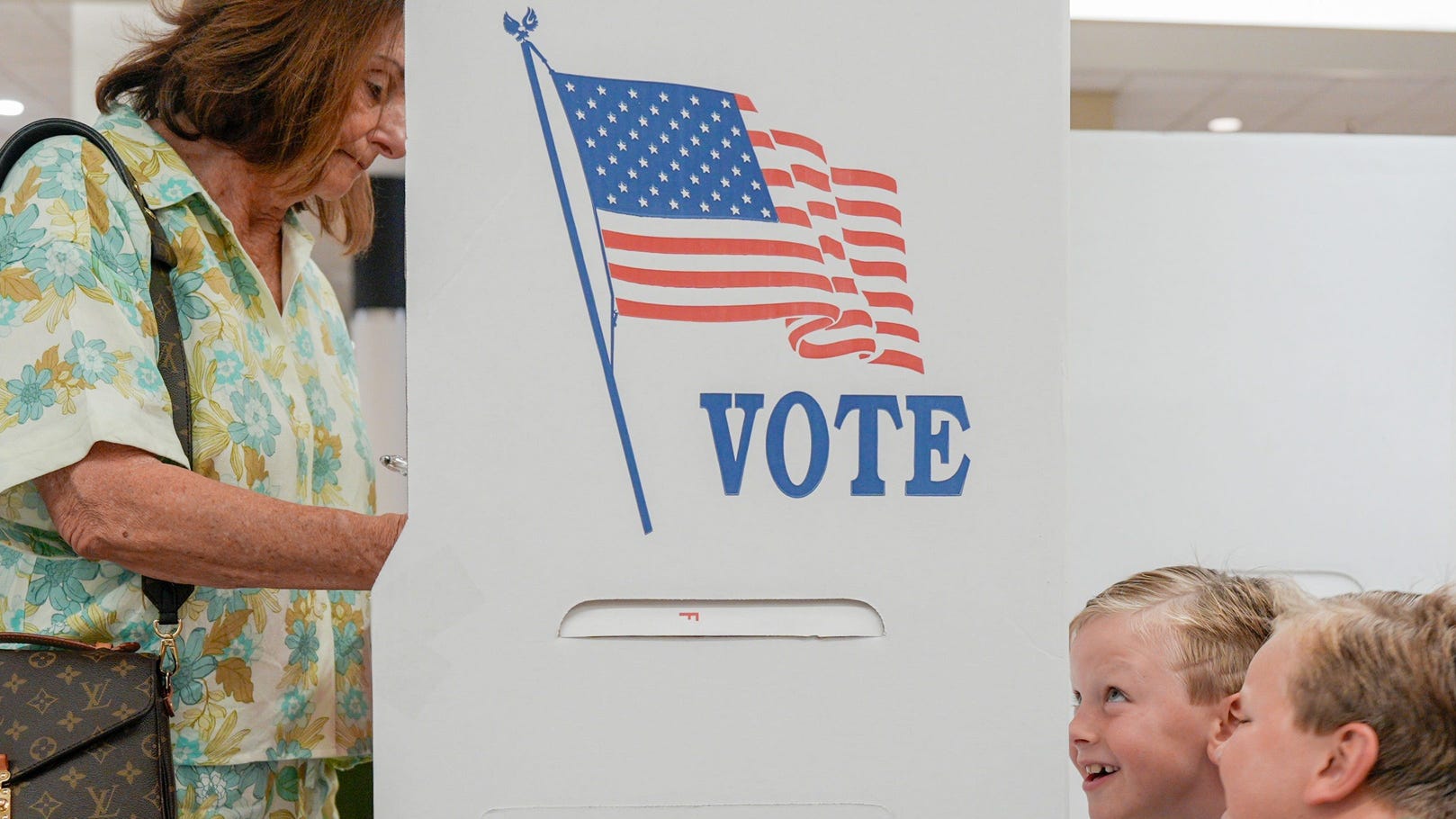
WASHINGTON – After hearing multiple election-related cases this term, the Supreme Court could add more to its plate for the fall as the political parties continue to fight over whether various voting rules prevent election chicanery or disenfranchise voters.
The justices will be deciding in the coming days whether to review laws in Arkansas and Texas that voting rights groups say are illegally making it harder for people with limited English proficiency to vote.
They’ve also been asked by the Trump administration to revive voter registration rules in Arizona that lower courts said suppress the vote.
And Republicans are appealing a court ruling about mailed ballots in Pennsylvania that could boost Democrats’ chances in that battleground state.
If the justices agree to take any of the cases, they would likely be argued in the next term that begins in October, with decisions handed down after the midterm elections.
Here’s a look at the pending appeals that the Supreme Court could accept or reject as early as June 22.
Arkansas limits how many voters one person can help
A Latino civil rights group is challenging an Arkansas law making it a crime for anyone who is not an election official to help more than six voters cast a ballot.
State officials say the law, which has been on the books since 2009, prevents “professional assisters” from exploiting a federal civil rights law that allows voters to receive help because of difficulty with English or other issues.
Arkansas United, a group that helps immigrants, said it has received more requests for help voting than it’s able to fulfill because of the state’s restriction.
A federal judge ruled against the state. But a federal appeals court reversed that decision, ruling the Voting Rights Act can only be enforced by the federal government and not through lawsuits brought by individual voters or groups.
The Mexican American Legal Defense and Educational Fund, which represents Arkansas United, is appealing that decision – both in hopes of getting rid of Arkansas’ law and to preserve the right of individuals to raise other voting rights challenges.
Texas limits who can help with mailed ballots
Another type of restriction on voter assistance is at the center of a challenge various voting rights groups have brought against a Texas law.
Under an “election integrity” bill Texas enacted in 2020, it’s a crime to pay someone to help a voter cast a ballot by mail.
The groups challenging the restriction said the state law prevents social service organizations from helping voters with disabilities or those who are not proficient in English, a conflict with the Voting Rights Act.
A federal judge agreed, but an appeals court reversed that decision.
Texas says the New Orleans-based 5th U.S. Circuit Court of Appeals got it right: Because the federal law is silent on the issue of compensation for voter assistance, the state argues, there’s no conflict between the federal and state laws.
In its Supreme Court appeal, the American Civil Liberties Union said the justices should get involved because state legislatures are increasingly imposing new burdens on voters who are supposed to be protected by the federal law.
Republicans are hoping to revive state voter registration laws in Arizona that lower courts said conflict with federal rules and suppress the vote.
The National Voter Registration Act requires states to “accept and use” a standard form to register voters for federal elections. That form requires that voters swear − under penalty of perjury − that they are citizens. Arizona’s voter registration form, by contrast, requires documentary proof of citizenship.
One contested issue is whether a voter who registers using the federal form can be barred from voting by mail unless they provide proof of citizenship. Another is whether Arizona must allow voters who submit the state registration form but don’t provide citizenship documentation to still vote in federal elections.
The Supreme Court is also being asked to decide whether Arizona’s method of purging voter rolls of anyone it thinks may not be a citizen violates the federal ban on systematic registration cancellations within 90 days of an election.
The federal government, which challenged Arizona’s rules during the Biden administration, is now defending them.
The Trump administration’s Justice Department told the Supreme Court justices they should hear the Republican National Committee’s appeal to settle “these important election-law issues outside the setting of a contested election.”
In recent years, Pennsylvania election officials had been discarding thousands of mailed ballots without proper dates on the return envelope until blocked by court rulings.
An appeals court last year said the state’s date requirement helps prevent voter fraud only in “exceedingly rare” circumstances, a reason not good enough to justify the disqualification of “presumably proper ballots.”
The Republican Party argues that if a court can declare unconstitutional “perhaps the least burdensome voting rule imaginable,” then “no voting or ballot-casting rule will be safe from open-ended, standardless federal judicial review.”
The initial reason for the date requirement – which began in the 1940s – was to determine if a ballot that had been received after the election had been sent before the polls closed.
But because Pennsylvania now requires absentee ballots to be received by Election Day, the date requirement no longer serves its intended purpose, Democrats argue.
Democratic voters are more likely to vote by mail than Republicans so stand to benefit in future elections if the Supreme Court declines to get involved.…Read more by Maureen Groppe