October 6, 2026
Abbreviated Pundit Roundup: The audacity…
I want to begin today with a quote from Michigan’s Democratic U.S. Senate candidate Abdul El-Sayed’s 2020 book Healing Politics about the enormous influence of the candidacy and presidency of Barack Obama as the former President announced that he will campaign with El-Sayed and Michigan’s gubernatorial candidate Jocelyn Benson in Detroit on October 24. Unless […]
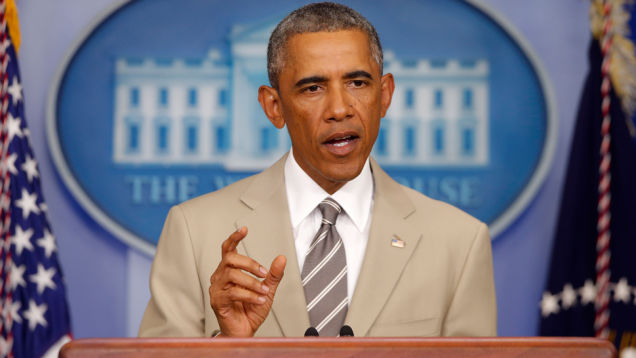
I want to begin today with a quote from Michigan’s Democratic U.S. Senate candidate Abdul El-Sayed’s 2020 book Healing Politics about the enormous influence of the candidacy and presidency of Barack Obama as the former President announced that he will campaign with El-Sayed and Michigan’s gubernatorial candidate Jocelyn Benson in Detroit on October 24.
Unless there’s an “October surprise,” the issues being debated for the midterm elections are pretty much locked in for this election cycle. Much of the remianing coverage of the midterms will be about polling and GOTV efforts.
Douglas Rivers writes for YouGov’s The Surveyor about the caution that needs to be taken in interpreting various polls’especially ones that screen for “registered voters “and “likely voters.”
“One should be cautious in interpreting poll leads. The devil in election polling is in the details. Who is being polled? How do you decide who is a “likely voter”? And what do you do about undecided voters? These choices can have a substantial impact on who appears to be leading and by how much. This is the problem of researcher degrees of freedom. When there are many possible decisions about how to analyze the data, there is a corresponding range of estimates that is not reflected in the reported margin of error.
This is a serious problem for evaluating election polling in 2026. Democrats hold a significant lead in nearly every national House poll, but the size of the lead varies substantially depending on how you define registered voters, likely voters, and the undecided. We’ve noticed this in our own Economist/YouGov polls, with Democratic leads in the September 25-28 survey ranging from a fairly modest 6 points among current registrants to a hard-to-believe Democratic lead of 16 points with a particular likely voter screen. This is roughly the difference between a gentle swell and a tsunami. […]
…Throughout 2026, Democrats have held a lead among registered voters. At the beginning of the year, the Democratic lead was fairly small, but it has grown over time. The Democratic margin averaged 4 points in January and grew to 6 points in September. But likely voters are much more Democratic than those less likely to vote. Among currently registered voters who say they have already voted or will definitely vote, Democrats lead by 13 points, while Republicans lead among the remainder by 15 points. There are only 26 respondents in the September 25-28 survey who plan to register, and they are overwhelmingly Democratic (+45). Among the seven respondents who plan to register and say they will definitely vote, none say they are voting Republican.”
Marcy Wheeler burns some midnight oil at her EmptyWheel blog explaining why Republicans are so outraged about Trump’s taxpayer-funded propaganda ads.
“While a few Republicans — John Kennedy, Thom Tillis, John Cornyn, even John Thune — have publicly scolded that the ads should be paid for with his own money, they haven’t said something more obvious. Republicans are fighting to defend Senate seats in ruby red states, including Texas, Iowa, Kansas, and Nebraska. Yet, first, Trump delayed spending his enormous war chest until September. Partly as a result (and partly because PACs have to pay higher advertising rates), the GOP is spending more but not necessarily getting more TV time.
And after that — after not doing basic things to try to preserve Republican majorities endangered by Trump’s own unpopularity — once he did start spending, he also unrolled a campaign ad that flamboyantly chose not to spend his own money — but instead to steal from taxpayers. And he put his increasingly unpopular mug at the center. […]
It is dumb advertising strategy. Counterproductive. But it’s also a giant insult to Republicans trying win elections, that Trump is looking for narcissistic tribute when that’s the worst possible thing he could do to their campaigns. […]
Whatever the public GOP criticism of this propaganda from Republicans, I imagine the private outrage has been far louder.”
Justin Wolfers of Platypus Economics explains that there is absolutely nothing wrong with the revisions contained in last Friday’s job report.
“…When we got the September numbers, we also got revisions to the July and August numbers. Those new numbers show that, contrary to previous reports, very few jobs were created this summer. Actually, the economy probably lost jobs in July, and the August boom was smaller than first reported. […]
You might be tempted to think that, because the first jobs number was high and the second number was low, the truth is somewhere in between. That’s not right. The revised number includes everyone in the first round plus the late responders. It’s a bigger sample and a more representative sample. That’s why the revised number is always and everywhere the better guide.
Some people are trying to undermine faith in government statistics. They point to the revisions as “evidence” that something is wrong with the data. On the one hand, yes, something is wrong with all data. On the other hand, no, no and no. Revising your estimates when you get new information is always the right thing to do. […]
A statistical agency that revises its data is much better than one that doesn’t. It’s like a person who admits their mistakes: they’re more honest than someone who denies ever messing up.”
Paul Krugman reiterates why the Trump regime’s massive corruption needs to be an issue for the midterm elections.
The level of corruption that Trump has engaged in and enabled in others is completely unprecedented – self-dealing that, as Trump would say, is like nothing anybody has ever seen before. America currently has a Republican president who, along with his family, has raked in billions, possibly close to $10 billion in personal gain from office in less than two years. He has effectively sold criminal pardons to scammers, invalidating the legal claims of their victims for restitution. His son-in-law Jared Kushner has become a billionaire running an investment fund for Gulf petro-state autocrats despite having no discernible investment skills. The Times just reported that Kristi Noem paid hundreds of millions over the reasonable price for 5 aircraft – one of which contains a marble bathroom and luxury bedroom – that were ostensibly for deportations but are instead sitting on the runway. And then there’s Trump’s Secretary of the Commerce, Howard Lutnick, whose family has doubled its net worth to over $7 billion, largely through its investments in Tether, the crypto-currency of choice by Iran, terrorists and rogue states. […]
Despite the extent of Trump and Co’s corruption, there’s still some voter education to be done here. Given everything else — the disastrous Persian Gulf war, tariffs, inflation, threats against our closest allies, visions of AI annihilation — it has taken a long time for Trump and Co’s lurid, open corruption to emerge as a major political issue. But there are growing signs that corruption is finally breaking through into the public consciousness. Hopefully this breakthrough will be hugely important not just for the midterm elections but for what happens afterwards.
Benjamin Shingler of the CBC looks at the return to power of the separatist party Parti Québécois in Quebec.
“The sovereigntist Parti Québécois is back in power, securing enough seats to form a minority government.
Under St-Pierre Plamondon, the PQ shifted further to the right, promising to rein in government spending, strengthen the protection of the French language and reduce the number of immigrants arriving in Quebec.
The PQ also wants to lay the groundwork for a referendum, which it plans to hold after U.S. President Donald Trump’s term ends in 2029. […]
Along with immigration, which is a shared responsibility with the federal government, St-Pierre Plamondon is gearing up for a fight with Ottawa on other fronts.
During the campaign, he said that all intergovernmental relationships with Prime Minister Mark Carney’s government will become part of the broader project to prepare the province for independence.
A PQ government will also face a potential constitutional showdown over Bill 21, Quebec’s secularism law. The Supreme Court of Canada is expected to issue a ruling on the controversial legislation by the end of the year.”
Elizabeth McKenna writes for The New York Times attempting to explain the victory of the far right wing’s Flávio Bolsonaro in Brazil’s first round of voting
“How is Flávio Bolsonaro — the son of a convicted coup plotter who is himself under criminal investigation for corruption — now the favorite against Mr. Lula, a global icon of the social democratic left?
Economic grievance, backlash against cultural change, polarization and the erosion of democratic guardrails are all among the reasons voters around the world are turning to far-right leaders. In Brazil, Mr. Lula and his supporters add foreign interference to that list, pointing to the Trump administration’s efforts to tip the scales in Mr. Bolsonaro’s favor through tariffs, visa revocations and State Department funding for groups that oppose Brazil’s Supreme Court. A Flávio Bolsonaro presidency would give Washington another subordinate partner in Latin America. It could also bring a pardon for his father and amnesty for the rioters who stormed Brasília on Jan. 8, 2023.
Another crucial answer lies in how Brazilians take part in civic life. A democracy’s health depends on whether and how its citizens participate, and in Brazil, the trends are discouraging. I’ve been conducting fieldwork on Brazil’s political movements since 2013, and what I’ve seen is that even though Brazilians vote and take action in large numbers, they increasingly do so in ways that strengthen authoritarian politics. […]
The Brazilian right has expanded its reach through a constellation of increasingly influential conservative think tanks and online grass roots networks. These movements lack formal leadership or a coherent ideological program, instead orbiting and exhibiting cultlike loyalty to figures like Mr. Trump and both Bolsonaros. They campaign year-round, say and do what a candidate cannot and recruit activists who have never before cared about politics. Their most visible figures are pastors, gospel singers and YouTubers with audiences in the millions, some of whom won office on Sunday with record vote totals.”
Finally today, Carlos E. Cue and Xosé Hermida of El País in English examine how protests about Spain’s housing crisis. generally, and the eviction of an 87-year old woman living in Madrid, specifically, has prompted Spain’s Prime Minister Pedro Sánchez to call for snap elections.
Sánchez acknowledged that his government had “made mistakes” and had not succeeded in accomplishing everything it had set out to do. After a weekend of extensive consultations with members of his cabinet, leaders of his party, the Spanish Socialist Party (PSOE), and allies from other political groups, he decided to take the step of dissolving Parliament nine months before the scheduled end of the legislative term, which until now he had always intended to complete. […]
Sánchez’s decision follows more than a week of nationwide demonstrations over Spain’s housing crisis. The protests were sparked by the eviction of 87-year-old Maricarmen Abascal from her Madrid home, a case that crystallized public anger over rising rents, evictions and a chronic shortage of affordable housing.
Demonstrations spread to more than 50 cities, including Barcelona, Valencia, Seville and Málaga. Tens of thousands of people have taken to the streets, while activists have also established protest camps in central Madrid, drawing comparisons with the 15-M anti-austerity movement.
The protests intensified after Congress rejected two decrees designed to strengthen protections for tenants. Junts per Catalunya (Together for Catalunya) opposed both measures, joining forces with the Popular Party (PP) and Vox, despite the fact that the government had negotiated parts of their content with the Catalan separatist party.
Everyone have the best possible day that you can…and thanks for reading!…Read more by Chitown Kev