





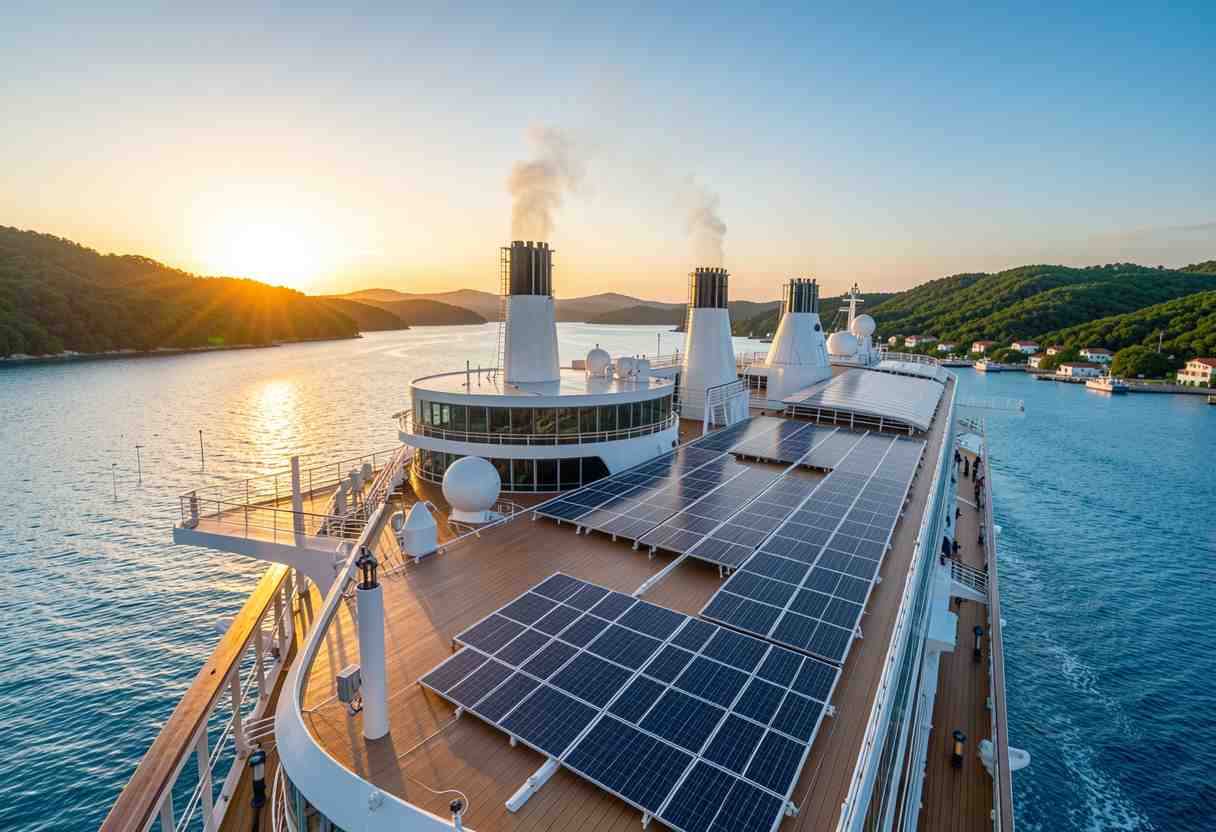
Is This the End of “Guilt Trips”? How Next‑Gen Sustainable Cruises in 2026 Are Challenging Flights and Resorts
Cruise sustainability in 2026 is reshaping not only how ships are built and run, but also how cruise travel and tourism are positioned as part of a wider sustainable, environment‑friendly travel ecosystem. The developments outlined are having direct impacts on destination management, guest expectations, brand positioning and long‑term growth potential for the sector.
From a cruise‑tourism perspective, The Princess Purpose is not just an internal project; it is strengthening the operational backbone that is needed to support sustainable travel at scale. By being introduced as an internal service‑strategy and operational‑alignment initiative, it is creating the conditions under which sustainability policies can actually be applied consistently across ships.
Because the programme is being rolled out first on Grand Princess, Ruby Princess and Royal Princess during April 2026, an experimental but controlled testbed is being created within live commercial operations. That phased approach allows real‑world feedback on how service standards, waste processes, energy‑aware procedures and guest‑communication protocols work in practice while the ships are visiting destinations such as Oranjestad and San Diego. From a tourism‑impact standpoint, this matters because reliable onboard systems are a prerequisite for reliably lower impact on ports and local communities.
The involvement of senior leaders – including ship captains, hotel general managers, executive chefs, restaurant operations directors, bar managers and inventory managers – signals that service and operations are being treated as integrated levers. When those stakeholders align on standards, it becomes easier to implement food‑waste controls, water‑use policies and responsible‑sourcing guidelines that affect local supply chains and waste streams in ports. For destinations, this can translate into fewer resource spikes when ships arrive, better handling of waste and a more predictable footprint from repeat calls.
By being framed as a structural change rather than a marketing campaign, The Princess Purpose is also strengthening trust with increasingly conscious travellers. Guests who are already booking cruises for iconic itineraries are more likely to accept and support sustainability‑linked behaviours – such as sorting waste correctly, respecting local rules on excursions and embracing slower, more educational experiences – when they are embedded in a coherent and consistently delivered service culture. Over time, this alignment between operations, service and sustainability can make Princess Cruises a more attractive choice for travellers who care about both comfort and impact.
Carnival Corporation – Less Left Over as a Bridge Between Ship and Shore
From a travel and tourism viewpoint, Carnival Corporation’s Less Left Over programme is demonstrating how sustainability can directly enhance the social value of cruise tourism. By treating food‑waste reduction and community impact as a single combined objective, it is redefining how onboard consumption is linked to onshore welfare.
In tourism economies, one frequent criticism of cruising has been that ships can create pressure on local infrastructure while leaving relatively little in terms of broad‑based community benefit. Less Left Over is addressing this by diverting unused but safe food from onboard kitchens to families and community organisations in port cities through partners such as OLIO. That redistribution changes the narrative: food that would once have strained local waste systems is now being converted into a resource that directly supports residents.
Analytics‑driven provisioning and more precise menu planning also affect tourism flows indirectly. When overproduction is reduced, onboard stocking is more tightly aligned with actual demand, which lowers the volume of waste that must be handled in ports and reduces the upstream environmental costs associated with food production and transportation. For port authorities and local service providers, this can ease pressure on waste infrastructure and improve the environmental compatibility of frequent ship calls.
The emissions‑intensity and food‑waste reduction targets attached to Less Left Over are also important from an industry‑positioning point of view. By aiming for a 40 percent reduction in greenhouse‑gas emissions intensity by 2026 and a 50 percent cut in food waste by 2030, Carnival Corporation is turning cruise sustainability into a measurable, verifiable element of its brand proposition. As travellers, especially from Europe and North America, pay closer attention to climate and social metrics when choosing holidays, such targets can help cruise vacations retain relevance against lower‑impact alternatives such as rail‑based touring or extended stays in a single destination.
At the macro level, the Cruise Lines International Association is shaping the environmental architecture within which cruise tourism must operate. For destinations, tourism boards and policymakers, the CLIA framework offers assurance that sustainability commitments are being pursued sector‑wide rather than left to isolated brands.
By committing member lines to net‑zero greenhouse gas emissions by 2050 and reporting progress on technologies such as advanced wastewater treatment, shore‑power readiness and alternative fuels, CLIA is converting sustainability into an industry standard rather than a niche selling point. For cruise tourism, this reduces the risk that particular destinations will bear disproportionate environmental burdens and provides a basis for constructive dialogue between ports, regulators and cruise operators.
The requirement that 100 percent of new ships on order be built with advanced wastewater treatment, and that a rising share of the existing fleet be retrofitted, has direct implications for marine environments around popular cruise routes. Sensitive coastal and island destinations that depend on clear water, intact reefs and healthy marine life for their tourism appeal stand to benefit when wastewater discharge is cleaned more effectively and monitored under sector‑wide standards.
Fuel flexibility and investment in energy‑saving devices also support more sustainable tourism growth. As ships become more efficient and able to use cleaner fuels, itineraries that were once environmentally contentious – such as frequent calls in fjords, polar regions or small archipelagos – can potentially be operated with a lower per‑passenger impact. That enables destinations to keep benefitting from cruise visitor spending while mitigating damage to the natural assets on which tourism depends.
Royal Caribbean – Royal Amplified and the Evolution of Onboard Demand
Royal Caribbean’s Royal Amplified programme is primarily framed as a guest‑experience upgrade, yet its indirect sustainability impacts are significant from a tourism‑analysis perspective. By reconfiguring spaces, adding new attractions and modernising hotel systems on ships such as Ovation of the Seas, Harmony of the Seas and Liberty of the Seas, the programme is influencing how energy, water and materials are used on board.
More efficient lighting, heating, ventilation and air‑conditioning systems, along with optimised public‑space layouts, can reduce per‑guest energy consumption. That in turn lowers fuel demand and associated emissions for each cruise, which benefits both global climate goals and local air quality in port cities. If amplified ships are then deployed on routes that include destinations concerned about overtourism or pollution, these hardware improvements give local authorities greater confidence in accepting or maintaining cruise calls.
From a tourism‑behaviour standpoint, the redesigned onboard product can also influence how guests interact with destinations. When more varied and compelling experiences are available onboard – including educational, wellness or nature‑themed offerings – pressure on shore excursions that concentrate large numbers of visitors in a few hotspots can be eased. This does not replace local experiences but can help distribute demand more evenly across time and between ship and shore, supporting more sustainable visitor‑management strategies in fragile destinations.
The data on environmental technologies and the cruise orderbook are central to understanding the long‑term impact on travel and tourism flows. When destinations and governments observe that new ships entering service between 2026 and 2028 are being designed around LNG, bio‑LNG, methanol and hydrogen, confidence increases that cruise tourism can be compatible with climate commitments and local environmental thresholds.
For many regions, especially in Europe, Alaska and small island states, the decision to welcome or limit cruise tourism is increasingly being linked to the technical profile of the ships involved. LNG‑capable vessels with advanced wastewater treatment and shore‑power connectivity are more likely to be seen as acceptable partners for long‑term tourism development than older ships with higher emissions and weaker pollution controls. As a result, the transition visible in the orderbook is directly tied to the ability of cruise companies to preserve access to sought‑after ports and regions.
Ships such as Explora III, Explora IV, Explora V and Explora VI, which are being designed not only for LNG but also for bio and synthetic gas and liquid‑hydrogen fuel‑cell trials, are sending a strong signal to destinations that the infrastructure being built now will be used to support cleaner forms of cruise visitation over many years. This technical trajectory underpins negotiations around berth slots, port expansions and joint marketing campaigns between cruise lines and local tourism authorities.
Quantified emissions‑intensity targets are also changing the strategic calculus for cruise‑tourism development. When a company like Carnival Corporation publicly states that a 40 percent reduction in carbon emissions intensity per available lower berth day is expected by 2026, the possibility emerges for destinations to frame future access in relation to performance thresholds rather than absolute bans or unrestricted growth.
Tourism boards and port authorities can, for instance, condition future capacity increases or new terminal developments on demonstrable improvements in emissions and waste performance. Because sector‑wide commitments through CLIA exist in parallel with company‑specific targets, stronger negotiation leverage is being created for destinations that are trying to balance economic benefits with environmental limits.
Meanwhile, travellers who are choosing between cruise and land‑based travel are increasingly exposed to these metrics through corporate sustainability reports, booking‑platform filters and media coverage. When they see that impactful long‑haul flights or traditional resort stays come with their own footprints, cruise products that can demonstrate compressing emissions intensity may be perceived as comparatively more acceptable – especially when paired with responsible itineraries and community‑benefit programmes like Less Left Over.
Within the competitive landscape of cruise tourism, Princess Cruises stands out for combining new LNG‑capable tonnage with an internal service‑alignment framework. From a tourism‑analysis viewpoint, this dual approach is important because it addresses both the physical and behavioural dimensions of sustainability.
The two 175,000‑tonne dual‑fuel ships being delivered in 2023 and 2025 are designed around lower‑carbon operations and are positioned to meet tightening regulatory standards on emissions and wastewater. This makes them attractive candidates for deployment on itineraries that involve environmentally sensitive regions, where authorities are increasingly scrutinising vessel types. At the same time, The Princess Purpose is creating a consistent internal environment in which crew members are better equipped to implement sustainability practices that passengers will actually experience – from food‑waste handling to educational messaging about local cultures and ecosystems.
For travel agents, tour operators and destination partners, this combination offers a more compelling platform for marketing sustainable cruise travel. Cruise packages featuring Princess ships can be promoted not only for their comfort and route appeal but also for their cleaner operations and structured service ethos. As more travellers look for holidays that can be enjoyed with a lower environmental burden and a clearer social‑impact story, these attributes are likely to strengthen Princess Cruises’ position in both established and emerging cruise markets.
The emergence of LNG and methanol as key fuels is central to how cruises are being positioned within the broader universe of sustainable travel options. No mode of long‑distance travel is impact‑free, but when cruise ships reduce life‑cycle emissions per passenger and dramatically cut local pollutants, their relative position compared with long‑haul aviation or multiple city‑to‑city flights can improve.
In 2026, LNG is serving as the dominant alternative fuel in the cruise segment, creating immediate gains over heavy fuel oil and marine diesel. Methanol is not yet widely used on cruise ships but is advancing rapidly across shipping and is expected to feature more prominently in future cruise orders. This evolution is important for the long‑term narrative: cruises that transition from LNG to green methanol or comparable low‑carbon fuels over time can credibly claim to be on a path toward deeper decarbonisation.
For the tourism sector, this means that cruise itineraries may increasingly be integrated into sustainable‑travel portfolios that also include rail, coach and low‑impact land stays. Multi‑modal packages can be designed in which a cruise leg is framed as the cleaner maritime component of a longer journey, particularly when guests are encouraged to spend more time in port cities, travel overland between embarkation points and participate in community‑based excursions.
European policies such as FuelEU Maritime and the extension of the EU Emissions Trading System to shipping are providing concrete guardrails that shape how cruise tourism evolves. These regulations are effectively setting a minimum standard for environmental performance in one of the world’s key cruise regions. For the travel and tourism industry, clear rules reduce uncertainty and allow longer‑term planning.
Destinations in the Mediterranean, Baltic, North Sea and Atlantic coasts can develop cruise‑tourism strategies in the knowledge that ships calling at their ports will be under increasing pressure to reduce greenhouse‑gas intensity and pay for residual emissions. This creates incentives for ports to invest in shore‑power infrastructure, cleaner bunkering options and collaborative emissions‑management initiatives with cruise lines. In parallel, it reassures residents and local stakeholders that environmental costs are being recognised and constrained.
From a demand perspective, travellers who are particularly concerned about climate impact may gravitate toward cruises that operate in regions with strict regulatory regimes, on the assumption that those itineraries are more likely to be run by cleaner, compliant vessels. This can, in turn, encourage cruise lines to deploy their most advanced ships on such routes, further accelerating the shift toward more sustainable hardware and practices.
Batteries and Hydrogen – Showcasing What Zero‑Emission Cruising Can Look Like
Battery‑hybrid and hydrogen‑assisted cruise operations in Norway are playing an outsized role in shaping perceptions of what sustainable cruising might become. For the wider tourism market, these vessels act as demonstrators, turning abstract concepts such as zero‑emission sailing into tangible guest experiences.
When visitors travel through UNESCO‑protected fjords on ships powered for hours by large battery packs and biogas, or when they board a coastal vessel supported by a 3.2 megawatt hydrogen fuel‑cell system, they directly witness how cruise travel can be decoupled from conventional exhaust plumes and engine noise. That experiential shift is powerful: it can reset expectations about what is technically feasible and desirable, making older, more polluting configurations look increasingly outdated in the eyes of travellers.
As these technologies mature and become more affordable, their expansion to larger ships and wider networks becomes more plausible. That progression holds significant implications for cruise tourism in sensitive regions worldwide, from polar itineraries and coral‑reef routes to river systems and archipelagos. In each case, the ability to offer near‑silent, low‑emission or zero‑emission cruising will play a major role in whether these destinations remain open to cruise visitation or impose hard limits.
When all these elements are considered together – internal programmes such as The Princess Purpose, food‑waste and community initiatives such as Less Left Over, sector‑wide frameworks under CLIA, product upgrades such as Royal Amplified, alternative‑fuel adoption, European regulations and battery‑hydrogen pilots – a clear pattern emerges. Sustainability is not constraining cruise tourism; it is being used to safeguard and reposition it.
In market terms, sustainability initiatives are helping cruises maintain relevance among travellers who might otherwise favour land‑based or low‑carbon alternatives. In destination‑management terms, they are making it easier for ports and communities to welcome ships without undermining local environments or quality of life. From an investment perspective, they are guiding ship design, port infrastructure and regulatory frameworks toward a model in which growth is conditioned on impact reduction.
As a result, sustainability on cruises is increasingly functioning as a competitive and strategic advantage. By reducing emissions, improving waste management, strengthening community benefits and aligning onboard culture with responsible‑travel expectations, these initiatives are promoting cruise tourism as part of a more sustainable and environment‑friendly travel stream. Over time, this is likely to ensure that cruising remains a viable and accepted component of global tourism, capable of delivering economic value while respecting the environmental and social limits of the destinations it relies on.…Read more by