





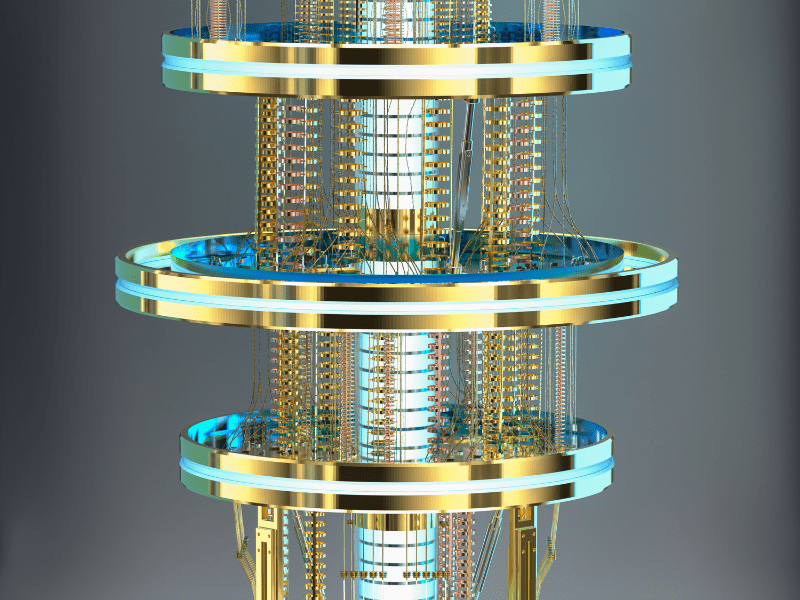
Rigetti Computing has announced the general availability of its 108-qubit quantum computing system, Cepheus-1-108Q, marking the company’s highest-qubit processor to date and a major step in its modular quantum scaling strategy. The system is now accessible to customers through Rigetti Quantum Cloud Services and via Amazon Braket, the quantum computing platform from AWS.
The new platform builds on Rigetti’s chiplet-based architecture, combining multiple smaller quantum processors into a larger system designed to scale more efficiently. For engineers and researchers following the rapid evolution of quantum hardware, the launch provides insight into how modular approaches may enable larger and more practical quantum computers in the coming years.
Cepheus-1-108Q is based on a modular design that links twelve 9-qubit chiplets together into a single quantum system. This triples the qubit count and chiplet configuration of Rigetti’s previous system, the 36-qubit Cepheus-1-36Q.
According to the company, the system currently achieves a median two-qubit gate fidelity of 99.1% with gate speeds of around 60 ns and a median single-qubit gate fidelity of 99.9%. Rigetti plans to further improve system performance during 2026 as development continues along its technology roadmap.
“Cepheus-1-108Q is a milestone that validates our ambitious approach to scaling quantum computers,” said Dr. Subodh Kulkarni, Rigetti CEO. “Our proprietary chiplet-based architecture is paving the way toward higher fidelity, higher qubit systems that will ultimately enable fault-tolerant quantum computing.”
Kulkarni added that the engineering innovations behind the new system reinforce the company’s confidence in modular quantum architectures and their potential to support larger machines while maintaining fast gate speeds.
To maintain performance at higher qubit counts, Rigetti introduced several technical improvements in the Cepheus system. These include optimized qubit and coupler designs that support faster two-qubit gates and higher fidelity operation.
The processor also supports high-fidelity native controlled-Z (CZ) gates, an important building block for error correction and scalable quantum circuits. On a prototype system, Rigetti reports achieving two-qubit gate fidelity of up to 99.9% at 28 ns using a proprietary adiabatic CZ gate scheme.
Additional upgrades include redesigned control electronics to improve the signal-to-noise ratio during qubit readout and an updated fabrication process called Alternating-Bias Assisted Annealing. This manufacturing technique improves qubit frequency targeting while reducing defects that can impact system performance.
During development, engineers also refined the system architecture to address interactions between tunable couplers that become more significant as systems exceed 100 qubits. With those issues mitigated, coherence time has become the primary performance constraint as the company scales further.
The new processor is accessible through Rigetti’s Quantum Cloud Services platform as well as Amazon Braket, enabling researchers and enterprises worldwide to experiment with the hardware.
“The addition of Cepheus-1-108Q to Amazon Braket gives our global customers another choice as they research quantum computing applications in materials science, optimization, and quantum simulation. As the first gate-based device on Braket with over 100 qubits, Cepheus-1-108Q delivers improved fidelities that allow customers to push to wider and deeper circuits,” said Eric Kessler, General Manager, Amazon Braket. “Rigetti was a launch partner for Amazon Braket, and we’re excited to deepen that relationship with this launch. With Cepheus-1-108Q, we bring the third generation of Rigetti devices to our customers, following Aspen and Ankaa. We remain committed to providing researchers and enterprises around the world with access to the latest quantum hardware.”
Rigetti expects the system’s median two-qubit gate fidelity to reach 99.5% later in 2026 and plans to update its broader technology roadmap later this year, including details on its path toward achieving quantum advantage within roughly three years.…Read more by Asma Adhimi