April 22, 2026
Rich Paul Says LeBron James Can Play Five More NBA Seasons
Rich Paul has reignited the conversation around LeBron James and his longevity with a bold claim that cuts against everything the league usually expects from a 41-year-old in his 23rd season. Speaking on the Game Over podcast, Paul made it clear that the conversation should not be about when LeBron retires, but how long he […]
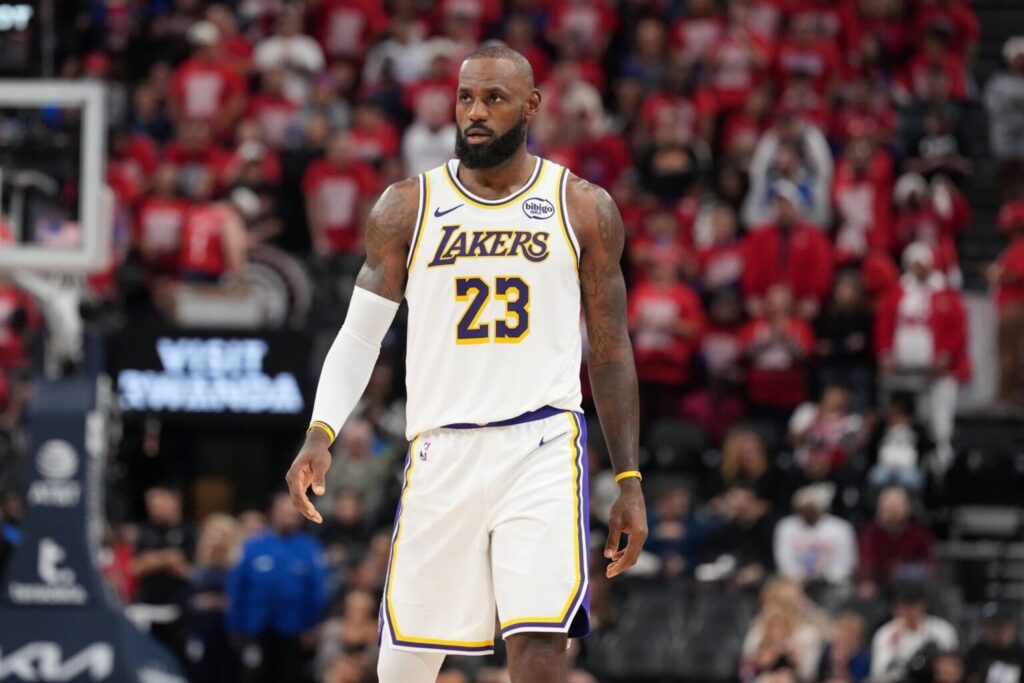
Rich Paul has reignited the conversation around LeBron James and his longevity with a bold claim that cuts against everything the league usually expects from a 41-year-old in his 23rd season. Speaking on the Game Over podcast, Paul made it clear that the conversation should not be about when LeBron retires, but how long he can realistically keep going at a high level.
“I’ll tell you this, LeBron James can play five more years. He can play at least 28 years in the NBA. Now I personally think, and don’t kill me, Savannah James, that he should play 25 years because he definitely has at least two more years in him. I’m not so sure that fans should be sitting here trying to push him out of the league. I don’t know about that.”
“You have to be very careful with that because when we get these opportunities, I don’t see anybody pushing Bruce Springsteen off the stage. I wouldn’t do that. I don’t want to do it selfishly. I don’t want to do it.”
That argument carries weight when you look at what LeBron is doing right now. During the 2025-26 regular season, he averaged 21.0 points, 6.1 rebounds, and 7.2 assists while shooting over 51.2% from the field. He adjusted into a secondary role alongside Luka Doncic and Austin Reaves for much of the year, focusing more on playmaking and control rather than volume scoring. That shift showed his ability to evolve without losing impact.
The playoffs have flipped that role completely. With Doncic and Reaves sidelined, LeBron has taken over as the primary engine again. Through the first two games against the Houston Rockets, he has averaged 23.5 points, 8.0 rebounds, and 10.0 assists while playing nearly 39 minutes per night. In Game 2, he delivered 28 points, 8 rebounds, and 7 assists, controlling tempo from start to finish and leading the Lakers to a 2-0 series lead that few expected.
That level of production at this stage is not normal. It is not even comparable to most late-career stars. LeBron is not surviving on reputation or limited minutes. He is dictating playoff games against elite competition, reading defenses in real time, and adjusting his approach possession by possession. That is where Paul’s argument gains credibility. If the performance holds, there is no basketball reason forcing an exit.
Durability remains the key factor. LeBron has already logged 1,916 games and 73,131 minutes across regular season and playoffs. The physical toll of that workload usually leads to decline, but his investment in conditioning and recovery continues to separate him from every historical comparison. Even now, he is playing heavy minutes in postseason games without showing a consistent drop-off.
There is also a mental component. LeBron recently spoke about living for the postseason, emphasizing that playoff basketball still drives him after two decades in the league. That mindset aligns with what Paul is suggesting. As long as the motivation remains and the body responds, there is no clear endpoint.
The situation around him adds another layer. The Lakers are competing without two of their primary scorers, and LeBron has responded by elevating his role again. If Los Angeles continues this run or even pushes deep into the playoffs, it strengthens the case that he still belongs at the center of a contender.
Paul’s statement is not just optimism. It is a reflection of what is already happening. The idea of five more years sounds extreme, but so did playing at this level in Year 23. At this point, the usual timelines no longer apply to LeBron James.…Read more by Vishwesha Kumar