September 11, 2026
How Iran Built Its System of Internet Censorship
There was no single turning point, Navid said, when he realized he had to leave Iran. Just that every day was harder than the last. “But if I had to pinpoint the moment of absolute hopelessness, it was the recent continuous two-month blackout.” As American and Israeli missiles began falling on Iran in late February, […]
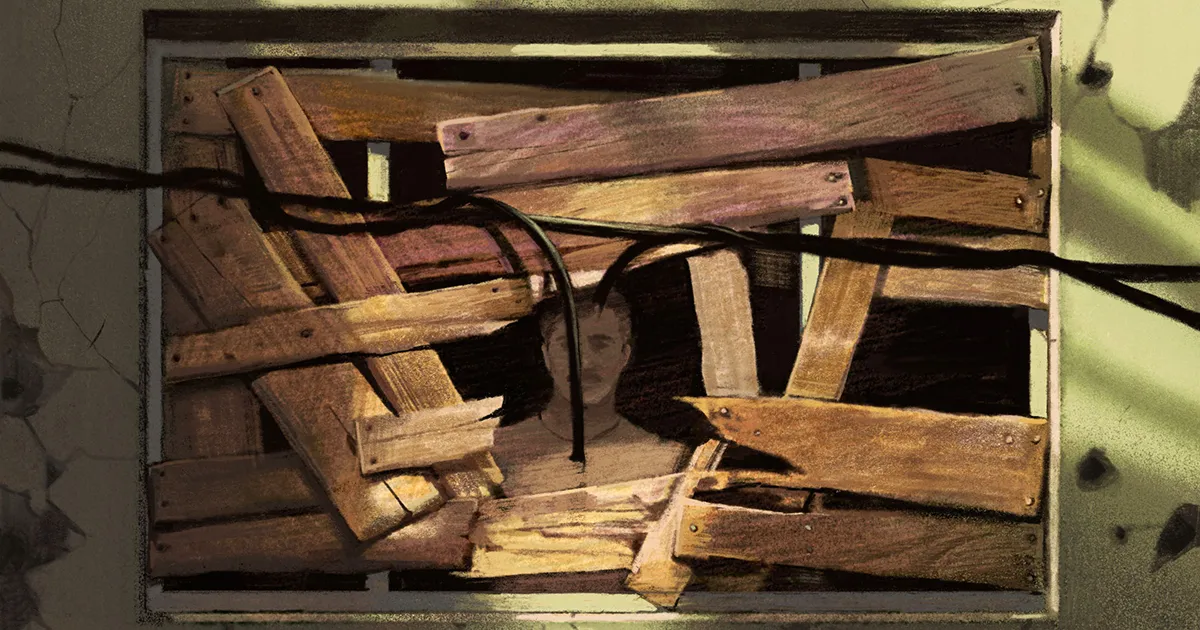
There was no single turning point, Navid said, when he realized he had to leave Iran. Just that every day was harder than the last. “But if I had to pinpoint the moment of absolute hopelessness, it was the recent continuous two-month blackout.”
As American and Israeli missiles began falling on Iran in late February, the government in Tehran did what it often does in a crisis, and turned off internet access for most of the population. Shutdowns usually last for days, during which time Navid, a software engineer, is unable to work. Those periods offline compound a daily struggle with restrictions imposed by the authorities and sanctions from overseas, leading to “a continuous, daily degradation of our digital life,” he said.
But this blackout was different. It stretched on for weeks, then months. “That was the moment I realized we had hit a wall — a state where no degree of technical knowledge, VPN, or workaround could save you,” Navid said, speaking like others interviewed for this article using a pseudonym to avoid retribution. “That realization — that no matter how smart or resourceful you are, a time will come when you are completely helpless — was when I surrendered.”
Since the turn of the millennium, the Iranian internet has evolved through cycles of repression. Each time the state feels threatened — by protests, cyberattacks or conflict — they tighten their control with new censorship tools and tactics, or by pulling the plug entirely. In response, Iranians find or invent new workarounds to reclaim online spaces and build their businesses. Then the cycle repeats.
At 88 days, the length of the blackout was unprecedented, causing enormous damage to the digital economy. Potentially more concerning, people who monitor Iran’s internet infrastructure say, is how it was executed, and what kind of internet was switched back on. Over the past couple of years, they said, the government seems to have made a technological leap forward that allows it to achieve much more comprehensive censorship, segregating internet access so that only a small political and economic elite can have full access to the world wide web, leaving the rest of the population contained on a highly-controlled national network.
“Censorship is decided partly by technology, partly politics, partly business,” Mehdi Yahyanejad, founder of internet freedom organization NetFreedom Pioneers — who has been working on ways to get around Iranian censorship for more than a decade — said. Iran has always had the ability to completely censor the internet, but only through blunt force measures that would have risked economic disaster. New technology, and the war with the US, have shifted that balance.
“Their survival has become an issue,” Yahyanejad said. “Now they are more ready to sacrifice businesses, to sacrifice people’s convenience and move the censorship toward more of a North Korean version rather than a more open system.”
Older Iranian millennials describe their early forays onto the internet in much the same way as their peers in Europe or the US. Slow dial-up connections got them access to a world of scattered information and new communities — message boards, blogs, and torrent sites.
“Going online meant the home phone line was busy, so the rest of the family, who weren’t using the internet, often complained because they couldn’t make or receive calls,” said Amin, who is now in his 30s and works in the media in Tehran. “Some of my earliest memories are chatting on Yahoo! Chat, reading online news about the 2003 Bam earthquake, and patiently waiting for songs to download.”
By the early 2000s, hundreds of internet cafes had appeared across Tehran, catering mainly to young people. Authorities started to heavily censor online content in an effort to control what people could see, putting sites carrying foreign media, pornography, Hollywood movies and western music on a blacklist. That was mostly executed by blocking traffic to and from the internet protocol, or IP, address associated with a site. Users trying to reach blacklisted pages were presented with the “Peyvandha Page” — a list of links to alternative websites approved by the censors.
This kind of blacklisting wasn’t particularly effective. “Most websites were accessible,” Amin said. “Including adult websites.”
As well as giving Iranians access to foreign content, the internet enabled an flourishing of local user-generated material. Hundreds of thousands of blogs sprung up, some of which were stridently political and wildly popular.
The apparently permissive atmosphere under the reformist presidency of Mohammad Khatami in the late 1990s was a reflection of the authorities’ technical capabilities, but also competing views within the Iranian leadership — a divergence that continues to shape how the internet is governed.
While there are hardline factions instinctively suspicious of the internet, others supported the idea that some limited freedoms online would act as a pressure valve; some saw the economic potential of the technology sector, and recognized that cracking down could curtail its growth.
Some thought that they could use these new media platforms for their own ends. Alongside the more progressive blogs, pro-government and conservative religious outlets also grew, some with large followings, and the government and Islamic Revolutionary Guard Corps began to experiment with how to use social media for propaganda at home and abroad.
“There isn’t necessarily a coherent or monolithic view about building the internet,” Mahsa Alimardani, a political scientist and associate director at Witness, a free speech NGO, said. “Even across people who are part of the elite system.”
Whenever the state feels directly threatened, those calculations change, and the scales are weighted towards repression. As elections approached in 2005, the blacklist grew dramatically, a number of progressive bloggers were arrested and scores of internet cafes shut down. After the hardline President Mahmoud Ahmadinejad took office that year, the government started to devote more resources to censorship.
“For me, this was one of the first moments when I realized that access to online information was not always guaranteed,” Amin said. “The combination of those restrictions and the disappointment many people felt after the election created a different atmosphere. The internet, which had previously felt like an open space for communication and discovery, started to feel like a space where access could be controlled.”
That sense of the walls closing in deepened in 2009, as Ahmadinejad sought reelection. His opposition contested the official result of the vote, and thousands of people took to the streets in protest in what became known as the “Green Revolution”. Social media was a vital conduit for organizing demonstrations and broadcasting what was happening to the rest of the world. As security services began a violent crackdown, the government ordered internet service providers to stop all internet traffic in and out of Iran, essentially pulling the plug.
For weeks, the internet was unstable, with periods where bandwidth was so low that services slowed to the point of being unusable. Traffic to Facebook and Twitter was heavily throttled, meaning they were effectively blocked for most users. From that point, Amin said, “internet restrictions became much more visible.”
Authorities have also cited the risk of cyberattacks — such as the Stuxnet virus that damaged Iran’s nuclear program in 2010 — as a reason to clamp down on internet access.
The need to get around censorship and sanctions spawned a cottage industry in circumvention. Iranian businesses and consumers often can’t access official versions of software that’s ubiquitous in the rest of the world — such as Microsoft’s Office suite — or app stores for Android and Apple devices, so local entrepreneurs figured out ways to crack software and jailbreak devices. To register for American tech services, users have to make it look like they’re not in Iran, so local companies started offering virtual private networks and single-use foreign phone numbers that could be used to set up accounts on overseas platforms.
“This ecosystem brought innovation,” Mahdi Ghodsi, an economist at The Vienna Institute for International Economic Studies, said. “The domestic environment has allowed some young talent to develop, to have startups, and to reproduce some of the services from abroad within the country.”
The diaspora also helped develop tools and strategies, including Toosheh, built by NetFreedom Pioneers, in 2015. Toosheh — “provisions” in Farsi — allows users to receive internet content hidden inside satellite TV feeds.
One oasis from blanket restrictions on foreign platforms has been Instagram. Observers of Iranian internet policy put forward a range of theories about why it was allowed to flourish while other platforms were blocked. Some think it was a reflection of divisions in the ruling elite, and somehow slipped through the cracks. “One theory is that they thought that they could control the people’s opinion,” NetFreedom Pioneers’ Yahyanejad said. “And they were letting the experiment run and see how that goes.”
Although Instagram has been technically blocked since 2022, it is still widely accessed via VPNs. It’s hard to get definitive user numbers because many people still disguise their locations, and Instagram has turned off some identifying features in the country, but top Iranian accounts have millions of followers, and many stores, brands and celebrities have a large presence on the platform, making it an important piece of infrastructure for the digital economy, as well as a cultural space where people share art, music, videos and social commentary. Whenever it’s blocked, users flock to VPNs to get access again.
“Instagram had a huge impact on cultural change,” Yahyanejad said. “I follow a shepherd from Iran on Instagram. It’s such a widely used platform that even shepherds now post.”
Other popular platforms have been banned, including in 2018, Telegram, which was widely used for encrypted messaging and sharing of news. In a demonstration of the dichotomies of Iranian censorship, however, state media and propaganda channels continued to use the platform extensively, serving content to the millions of people logging on via VPNs.
Likewise, years after Twitter had been blocked in Iran, the then-Supreme Leader, Ayatollah Ali Khamenei, maintained accounts on the platform in Farsi, English, Spanish and Russian.
Over the years, censors’ tools improved, meaning that circumvention techniques became less reliable. Technology such as deep packet inspection allows authorities to more consistently block websites and platforms, and sometimes to target traffic coming via VPNs.
“It can be extremely frustrating,” Amin said. “People have to constantly switch between different VPNs because one service may work today and stop working tomorrow.”
This “increasingly complex cat and mouse game” went on for years, he said, but he managed to build a career anyway. Many others did the same, and the tech sector grew, and technology became embedded across the broader economy.
Then came Bloody Aban — named after the month in the Persian calendar. In November 2019, protests over rising fuel prices began in several cities, and expanded nationwide. As the government began a violent crackdown — in which hundreds of people were killed — it ordered internet service providers and cellphone networks to block all connections to the world wide web.
Despite the decade of investments in new tools for targeted censorship, this was an unsophisticated, blunt force act, shutting off routing to the global internet for seven days — at the time, one of the longest and most comprehensive internet shutdowns ever recorded worldwide, with almost the entire country offline. The cost to the economy was huge, with estimates mostly in the hundreds of millions of dollars, but the blackout showed once again that the government was willing to sacrifice almost anything to retain control.
“They don’t perceive costs and benefits as we do,” Ghodsi, the economist, said. The authorities are well aware of how much the disruptions to the internet hit the economy, he said, but “they prefer to sustain the regime’s power.”
Researchers who study the Iranian internet have to do so from a distance — they rarely have access to servers inside the country and they have to interpret what signals they can get to try to figure out how the authorities are implementing restrictions. Tracking the techniques over the years shows that the government has attempted to reduce the economic impact of shutting down the internet, experimenting with, for example, stopping all mobile connections but leaving fixed-line internet in homes and offices up and running, or implementing internet curfews during certain times.
“Iran is a good example of trying every different strategy to try to mitigate the costs of a shutdown,” said Doug Madory, director of internet analysis at Kentik, who has been monitoring internet blackouts since 2009.
The most ambitious of the Iranian government’s efforts began around 2013, when it began rolling out the National Information Network, or NIN — a sovereign intranet, running on infrastructure entirely based inside Iran. Experts who looked into how it was being constructed at the time said that it borrowed from Chinese and Russian approaches to censorship, with some of its own idiosyncrasies.
“The dream is if they want to do a shutdown, they can continue to operate with their domestic network,” Madory said. “If it works.”
Iranian companies were encouraged or ordered to move onto the new network. Gradually, a parallel ecosystem of apps and services evolved, including e-commerce, gaming and ride-hailing services, and alternatives to international social media and messaging platforms. Bale, Soroush, Rubika, iGap and others are designed to replace WhatsApp or Telegram, offering messaging, as well as some social commerce and payment features. Aparat, launched in 2011, is similar in function to YouTube, and has millions of users in Iran and among the diaspora.
Bloody November was the first major test of the NIN. It was not a success. It glitched, payment systems dropped out, and some key features — such as search — needed a connection to the world wide web to function. In 2022, during the “Woman, Life, Freedom” protests over the death in police custody of a young woman, Mahsa Amini, global internet connections went down for most users, but the NIN was more stable.
“We had times when we were like: ‘Oh, this thing’s never going to work,’” Madory said. “But these people have all the time in the world. If it takes them 20 years, they’re just going to keep working on it until they get it. It’s not like a corporate thing where they’ve got to turn a profit in the next quarter to make this fly.”
By 2025, the internet was again disrupted during the Twelve-Day War with Israel. Previous shutdowns had been executed by shutting off traffic at the network level — a blunt force blocking of routes in and out of the country. This time, analysts observed restrictions cascading through the network, suggesting that the Iranian government had distributed its censorship architecture more widely, allowing for more precise and effective blocks. “It seems,” Madory said, “like Iran took a big leap.”
In January 2026, as street protests flared across Iran, the internet went down, again for around 10 days. The extent of it was a surprise to outside observers. Although it was executed through more high-tech means, it was practically a repeat of 2009. Virtually no one could get onto the internet, even those normally granted more privileged access. Analysts and Iran watchers interpreted it as a moment of panic — an unconsidered demand for everything to be pulled at a moment of vulnerability.
The 88-day shutdown that began in February was more strategic. Rather than identify sites, services and applications that it wanted to shut down and block, the Iranian authorities flipped the system around, so that everything except the NIN became inaccessible by default. Using sophisticated middleboxes — devices that filter internet traffic — the authorities can then whitelist platforms and sites for different groups of users. The technology makes it possible to shut down even sophisticated VPNs, and other circumvention strategies.
One Iranian official who worked on the NIN said the new technical approach illustrated a change in the philosophy underlying Iran’s digital policy, from one of brute on-off connectivity to one based on continuity of basic services even during war.
Experts, including Iranian computer scientists with access to servers inside the country, said it’s difficult to say precisely what technology the authorities have deployed, and whether it’s home-grown or bought in from another authoritarian country. But, they said, achieving this depth of control likely requires huge computational resources — using middleboxes to inspect every connection, every internet session in a country of more than 90 million people.
Under this new system, individual SIM cards or connections in specific locations — such as offices or banks — can be given higher tiered access, all the way up to unfettered use of otherwise banned platforms. During the blackout, politically connected people, those working in strategic industries, and some journalists working for state media and semi-official outlets were given whitelisted SIMs.
The state’s propaganda had access, too. Government-backed groups pumped out large volumes of AI-generated music videos, featuring Lego figures and anti-American lyrics. “It was very clear that they were getting access to the special privileged internet,” Alimardani from Witness said. Those videos, often profane and steeped in internet-native humor, offered “a glimpse into a different generation of elites,” she said — one that’s completely at home on global social media platforms.
Iran has offered citizens versions of tiered access to the internet before, with some users having privileged access. Achieving that has been difficult, and it’s gone wrong at times. During the January blackout, a network of X accounts that purported to be pro-independence voices from Scotland suddenly all went offline, revealing them to have been part of an influence operation based in Iran.
“If you want the elites to remain connected and have that tiered internet, it becomes very difficult. And of course, ensuring that no one finds a way into that network takes a lot of technical skill,” Alimardani said. “It has become much more sophisticated.”
In the depths of the February-May blackout, whitelisted SIM cards were given to a wider circle of people and institutions based on approval by the authorities. Academic institutions, banks and some companies that needed to deal with the outside world, for instance, were given access.
Some people were able to buy it. Starting in April, telecoms companies began offering an “Internet Pro” service — whitelisted access for those who could afford the high fees of around $100 for the SIM card alone. Other businesses have begun selling VPNs that appear to use whitelisted connections to access the internet.
That’s created a tiered internet, where access to the world wide web is bought, earned through loyalty, or granted in exchange for greater control. In some parts of Iran, small businesses have been offered access to whitelisted connections via government-backed co-working spaces, which require them to register and submit to heavy monitoring. Hanging over all of these users is the threat that it could be withdrawn at any time.
It’s also a source of revenue for the government and for telecoms companies connected to the IRGC, which can profit by selling ways around internet restrictions that they themselves impose.
Amin, the media worker, said that he could have accessed a whitelisted SIM card through his work, but he chose not to on principle. “The system follows a rent-seeking logic,” he said. “First, a basic and universal right — free access to the internet — is restricted for the wider population, and then the same access is selectively granted to certain groups and individuals as a privilege.”
Those without whitelist connections during the blackout had to use the NIN. This time, it mostly functioned — though the authorities still apparently hadn’t figured out how to make search work, and had to open a connection to Google, according to two computer scientists who study the intranet, who spoke on condition of anonymity so as not to compromise their access to local networks.
As the outage dragged on, people started to do as the government hoped, and migrated onto homegrown platforms, even though many were suspicious.
“Honestly, I was like many other Iranians at first — I resisted joining domestic messaging apps,” Amin said. “But during the war, especially after attacks on infrastructure like petrochemical facilities and bridges, I even created my own channel on Bale to share information.”
Navid, the software engineer, wasn’t so sanguine. He’d spent 20 years struggling with restrictions. From the age of seven, he battled with shaky connections; at university, he found workarounds to reach tutorials on YouTube and other academic resources. After graduating from one of the country’s best colleges, he won contracts abroad.
“I did all that hoping my education would actually matter. But when a blackout like that happens, you feel like your whole life has gone to waste. You’re suddenly forced to choose between leaving your family and friends behind, or staying and ending up unemployed or stuck doing low-level work,” he said. “It made me realize that the only real ‘workaround’ left was to emigrate.”
Those who stayed face an economy under siege. The US has pledged to cut off all of Iran’s commercial ties to the outside world, exacerbating a currency crisis and sending inflation to over 80% as of August.
Navid packed and left for Armenia, one of the few countries that allow Iranians to enter without a visa. But then, the internet was restored in Iran. As with previous blackouts, the internet that came back up was more restrictive. Instagram is still blocked and WhatsApp access remains patchy, but for now the whitelisted VPNs allow users who are willing to pay to access them, and other banned services.
That makes it “workable”, Navid said, and the ties that bind him to the country — a wife and child who can’t as easily relocate — meant that despite the war, and constant threat of another blackout, he went home. “Starting over from scratch,” he said, “takes a level of courage I don’t currently have.”
Many Iranians expect another blackout will come — next time the government feels the need to assert control. The new configuration of Iran’s internet marks a low point for those who have spent years probing the firewalls for gaps. “There are limited things that you could do at the end of the day to get around censorship. I mean, when they have full control over all the infrastructure,” Yahyanejad, from NetFreedom Pioneers said. The whitelist, he said, “has changed the equation.”
Activists’ only hope is to out-innovate the state, Yahyanejad and other experts said. What comes next, “is not a new VPN,” he said. “It’s about satellite internet.”
Starlink, the market leader, is banned in Iran, and penalties for owning or importing terminals for the service are harsh. Some news reports suggest the government has used electronic warfare systems to try to disrupt signals, and drones to search rooftops for terminals. But thousands of the devices have been smuggled into the country. It’s a small number — only a fraction of the population has access, even though each terminal can provide internet access to a whole apartment building or office.
Yahyanejad said he expects that a lot more terminals will make their way into the country. In July, terminals officially went on sale over the border in Iraq — where a million Iranians travel every year to Shi’a holy sites. “It’s going to make it much easier to bring these devices into Iran,” he said. “Of course there is risk, but once there is a large supply of these terminals in Iran and a lot of people are using it, the government cannot just arrest people and accuse them all of being a spy.”
NetFreedom Pioneers is already working on trying to develop a system that will allow Iranians to connect to the global internet via other people’s Starlink terminals — turning devices in the country into more accessible gateways to the world wide web. The cat-and-mouse game of circumventing censorship is back on, Yahyanejad said.…Read more by Peter Guest, Patrick Sykes