October 30, 2026
Google Begins AI Overview Ads Rollout to More Countries, Calls These Sponsored Links
Google Search has been undergoing one of its most significant transformations in years, and the advertising side of that evolution has now officially crossed borders. The company has confirmed that sponsored content is now entering AI-generated search results in markets outside the United States, with a broader global expansion to follow. Google announced earlier this […]
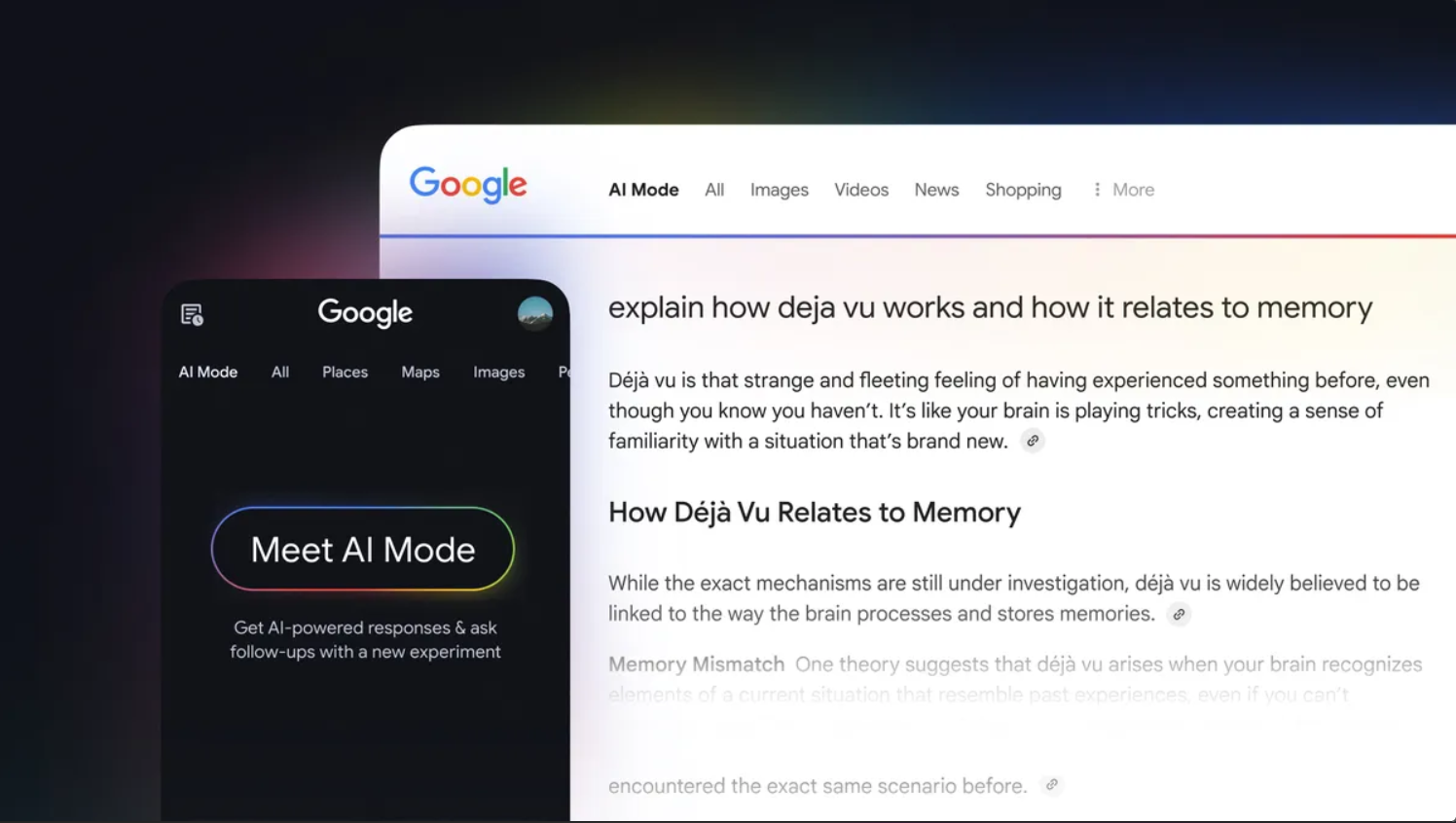
Google Search has been undergoing one of its most significant transformations in years, and the advertising side of that evolution has now officially crossed borders.
The company has confirmed that sponsored content is now entering AI-generated search results in markets outside the United States, with a broader global expansion to follow.
Google announced earlier this week that it is expanding ads in AI Mode to ten new countries: Australia, Canada, India, Kenya, Malaysia, New Zealand, Nigeria, Pakistan, the Philippines, and Singapore. The announcement was made by Shashi Thakur, VP and GM of Google Search Ads and Ads on Google Experiences, who noted that the expansion follows early positive signals from the US rollout, where click-through rates on sponsored content within AI Mode are already comparable to those on organic product list items.
The company added that it plans to expand AI Mode ads to additional markets in Q4 2026, including Brazil, Mexico, and the United Kingdom. That roadmap means a significant portion of Google’s global search audience will encounter sponsored results embedded within AI-generated responses before the end of the year.
As part of the same announcement, Google confirmed it is also launching multi-turn ads in the United States, which allow sponsored results to appear in follow-up queries within AI Mode conversations. This capability addresses a gap in the earlier rollout, where ads only appeared in the first AI-generated response and not during the conversational exchanges that followed.
Google has been consistent about one aspect of the ad integration: all sponsored content appearing within AI Mode will carry a clear “Sponsored” label. The label is applied to all ad formats appearing within AI-generated responses, whether they appear above, below, or integrated within the overview itself, keeping them distinct from the organic AI-generated content that surrounds them.
This labeling approach matters because of how differently these ads function from traditional search ads. In standard Google Search, the boundary between the sponsored section at the top of the page and the organic results below it is relatively clear. Inside an AI Overview, where the response is conversational and pulls together synthesized information, the risk of blurring that line is higher, which is why the explicit Sponsored label is central to the format.
AI Mode queries are, on average, three times longer than traditional search queries, according to Google’s own AI Mode Report from May 2026. That length reflects the more complex and conversational nature of what people ask when using the AI-powered interface, and it is precisely that complexity that Google says makes the ad experience inside AI Mode feel more relevant rather than disruptive.
“AI helps us better understand what people are looking for, allowing us to connect them to the businesses and services that best match their needs,” Thakur wrote in the announcement.
The expansion of AI Mode ads follows a staged rollout that began in earnest in mid-2026. Google first began testing ads within AI Overviews for US mobile users in late 2024, keeping visibility extremely limited during that initial phase. By May 2026, at Google Marketing Live, the company introduced two new ad formats specific to AI Mode: Conversational Discovery ads and Highlighted Answers, both of which were in US-only testing at the time.
AI Mode ads expanded to desktop in the United States later in 2026, and the October 28 announcement marks the first formal global expansion of the format. Research firm Adthena had previously detected ads appearing inside AI Overviews across 25,000 searches in the US, confirming that the rollout was beginning to scale ahead of the international announcement.
Notably, even in markets where AI Mode ads are now available, sensitive topic categories remain excluded. Advertisers in healthcare, finance, and similar verticals are not eligible to have their ads appear inside AI Overviews, a restriction that applies across all supported countries regardless of local regulations.
AI Overviews is a feature within Google Search that generates a synthesized, conversational summary at the top of search results in response to a query. Rather than presenting the user with a list of links alone, AI Overviews combines information pulled from across the web into a single cohesive response, with links to supporting sources embedded throughout.
AI Overviews is powered by a version of Google’s Gemini models, and the feature is designed to handle more complex, multi-part questions that would previously have required a user to visit several separate websites. Google has described AI Overviews as a core part of how it sees Search evolving, positioning it as the foundation for a more conversational and AI-native search experience rather than a supplementary feature.
Why Are There Ads in AI Overviews?
Advertising is the primary source of revenue for Google Search, which generates the vast majority of Alphabet’s total income. As AI Overviews becomes a more central part of how users interact with Search, Google needs to ensure that its advertising business can continue to operate within the new format rather than being displaced by it.
If AI-generated summaries were to reduce how often users click through to websites, they would also reduce the opportunities for Google’s traditional Search and Shopping ads to reach users. Integrating ads directly into AI Overviews solves that problem by creating new ad inventory within the very surface that would otherwise compete with it. Google has also pointed to internal data suggesting users are comfortable with ads in AI Mode and find them relevant, with click-through rates on sponsored content comparable to those on organic product listings, framing the ads as an enhancement to the experience rather than an interruption.
What Kind of Ads Does AI Overviews Bring?
Google supports multiple ad formats within AI Mode and AI Overviews. Search ads, the standard text-based sponsored results, can appear above or below an AI Overview when they are relevant to the query. Shopping ads, which display product images, prices, and merchant names, can appear within AI Overviews when a query has a commercial intent, surfacing items available for purchase alongside the AI-generated response. In a scenario where someone asks how to bring small dogs on a plane, for example, sponsored listings for small dog carriers can appear beneath the AI summary.
The two newer formats Google introduced at Marketing Live 2026, Conversational Discovery ads and Highlighted Answers, are designed to feel more native to the conversational AI interface, integrating recommendations and sponsored links into the flow of a multi-turn conversation rather than placing them as a separate block. All of these formats carry the Sponsored label and are served through the same Google Ads system advertisers already use, with targeting and eligibility determined by the same signals and policies that govern standard Search and Shopping campaigns.…Read more by Isaiah Richard