February 14, 2026
Creative Expression And Control
Artists, States and the Struggle Over Freedom of Expression In a city long defined by political diplomacy and cultural crosscurrents, the 2026 Pan-African Network for Artistic Freedom (PANAF) Summit opened with an expansive ambition: defending Africa’s right to imagine itself freely. Held for the first time in Ethiopia, the summit convened from February 6 to […]
Artists, States and the Struggle Over Freedom of Expression
In a city long defined by political diplomacy and cultural crosscurrents, the 2026 Pan-African Network for Artistic Freedom (PANAF) Summit opened with an expansive ambition: defending Africa’s right to imagine itself freely.
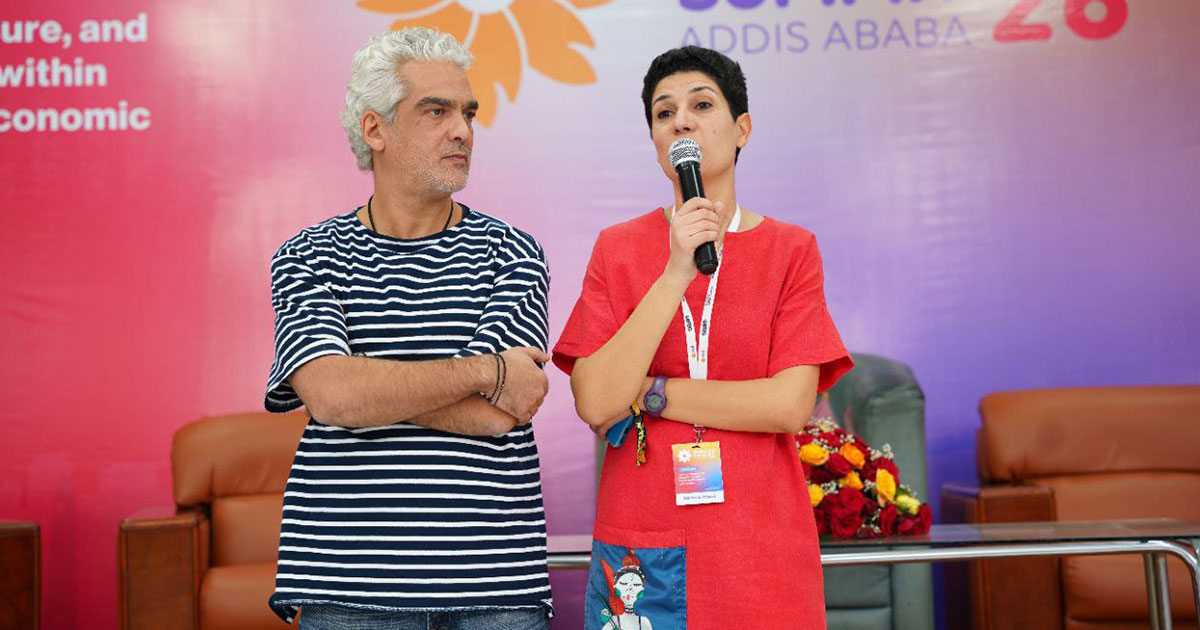
Held for the first time in Ethiopia, the summit convened from February 6 to 8 at the Ghion Hotel under the theme, “Freedom to Create: Forces, Influences and Opportunities in the Digital and Economic Landscape.” What began in 2022 as a Selam-led initiative with PANAF’s backing has since evolved into a continental forum where artists, policymakers, civil society leaders, and multilateral institutions grapple with the shifting boundaries of creative expression.
Now in its fifth edition, the gathering drew representatives from African Union bodies, UNESCO-aligned organizations, musicians, development partners, and regulators. The agenda reflected a widening concern across the continent: how technology, markets, and state power increasingly shape who gets seen, heard, or silenced.
Organized by Selam Ethiopia, this year’s summit framed artistic freedom not as an abstract ideal but as a lived reality negotiated within digital infrastructures and economic systems. Participants examined how algorithmic visibility, platform governance, surveillance technologies, and online censorship are quietly rewriting the rules of cultural production.
The meeting marked a clear evolution from the 2025 summit in Zanzibar, which centered on defining artistic freedom within African contexts and strengthening solidarity among artists facing isolation or risk. While Zanzibar emphasized movement-building and civic engagement, Addis Ababa shifted toward structural pressures — particularly the convergence of technological control and financial precarity.
Economic survival emerged as a recurring theme. Organizers argued that artistic freedom cannot be sustained without viable creative industries, fair compensation models, and regulatory environments that protect both expression and livelihoods. The conversation signaled a departure from romantic notions of “art for art’s sake,” advancing instead a framework where creative independence is inseparable from economic security.
Yet the summit’s core premise remained rooted in rights.
Artistic freedom — the ability to create, distribute, and engage without censorship or intimidation — was repeatedly linked to broader democratic principles. Across sub-Saharan Africa, however, constitutional guarantees of free expression remain uneven, producing a landscape where creative work is often entangled with political risk.
In some countries, artists operate within flourishing cultural ecosystems. In others, creative voices encounter censorship, legal threats, or chronic underfunding, particularly when artistic work challenges authority or addresses subjects like corruption, governance, or human rights.
Despite these constraints, the summit’s tone was neither fatalistic nor rhetorical. Delegates pointed to the resilience of African creative communities, where tradition and experimentation coexist and where cultural production continues to expand even under pressure.
Organizers called for a stronger regional alliances, clearer digital governance standards, and policy frameworks aligned with the African Union’s Agenda 2063. A key aspect of the discussions revolved around how digital censorship, surveillance, and algorithm-driven visibility influence the autonomy of African artists.
Against a backdrop of persistent constraints on the right to create and distribute artistic work — and amid uneven protections for free expression across Africa — Topsy Sonoo Oureveena, the African Union’s Special Rapporteur on Artistic Freedom, said artistic culture remains indispensable to the health of societies.
While the cultural sector should provide space for free expression, she warned that some governments continue to instrumentalize regulation to restrict communities and impede the free flow of information.
Freedom of expression and access to information, she said, sit at the core of Africa’s human rights framework, which mandates the protection of these liberties as foundations of sustainable democracy.
“Freedom of expression is a fundamental human right, essential to personal development, political awareness and participation in public life,” Oureveena said. “Artistic freedom is the right to imagine, create and share diverse cultural expressions without government censorship, political interference or pressure from non-state actors.”
Artistic freedom, she added, also includes the public’s right to access cultural expressions, underscoring its broader social significance. The principle, she explained, reflects the extent to which artists can work independently and produce creative work without fear of restriction.
“The freedom enables artists to imagine and share different forms of expression without fear of censorship or suppression,” she said. Without that space, artists face barriers to challenging dominant narratives, inspiring audiences and contributing to social transformation.
At the same time, Oureveena stressed that combating misinformation must not become a pretext for repression. Artistic expression, she noted, plays a vital role in shaping public discourse, strengthening cultural identity and advancing inclusive governance.
“Art is not only an expression of emotion; it is also a means of communicating ideas,” she said, pointing to growing pressures on expression both online and offline. Many of these constraints, she observed, stem from censorship, surveillance and intimidation, as governments and digital platforms increasingly rely on restrictive laws and regulatory mechanisms to silence voices.
Referencing Article 9 of the African Charter on Human and Peoples’ Rights, a representative of the African Union Commissioner for Health, Humanitarian Affairs and Social Development emphasized that the Charter recognizes culture and creativity as central to the continent’s transformation. Culture, he said, must not be treated as peripheral to development.
Culture functions as both a driver and an enabler of inclusive growth, social cohesion and the projection of African identity on the global stage, he added.
“The freedom to create, imagine and express is fundamental to building the Africa we want,” he said, highlighting the growing significance of digital platforms in cultural and artistic development. “Digital spaces are evolving into new economic models, reshaping regulatory environments and presenting significant opportunities for the sector.”
Yet the digital sphere, he cautioned, also exposes persistent inequalities, even as access to technology expands — challenges that demand coordinated, rights-based and forward-looking policy responses.
“In line with the principles of freedom of expression, member states have an obligation to protect artists, promote cultural diversity and ensure that creative professionals can work with dignity and safety, free from censorship and other forms of interference,” he said.
Despite the Charter’s guarantees, invited participants at the summit — including artists — expressed concern that some governments continue to operate outside its framework. Legal protections, they argued, are often undermined by restrictive legislation that curtails artistic rights and narrows the space for creative expression.…Read more by Abraham Tekle