July 22, 2026
US to Channel 296 Trillion Won to Star Scientists Amid China Talent Drain
[Belated Move to Counter China After It Drained Top Brains] China Succeeds in Recruiting Even Nobel Chemistry Laureate Yaghi Research AI Also Overtakes US to Claim No. 1 Spot US Shifts to Directly Funding Individuals Rather Than Universities Cutting Bureaucracy to Drive Faster Results Focusing on Profitable Technologies Such as AI and Quantum Computing In […]
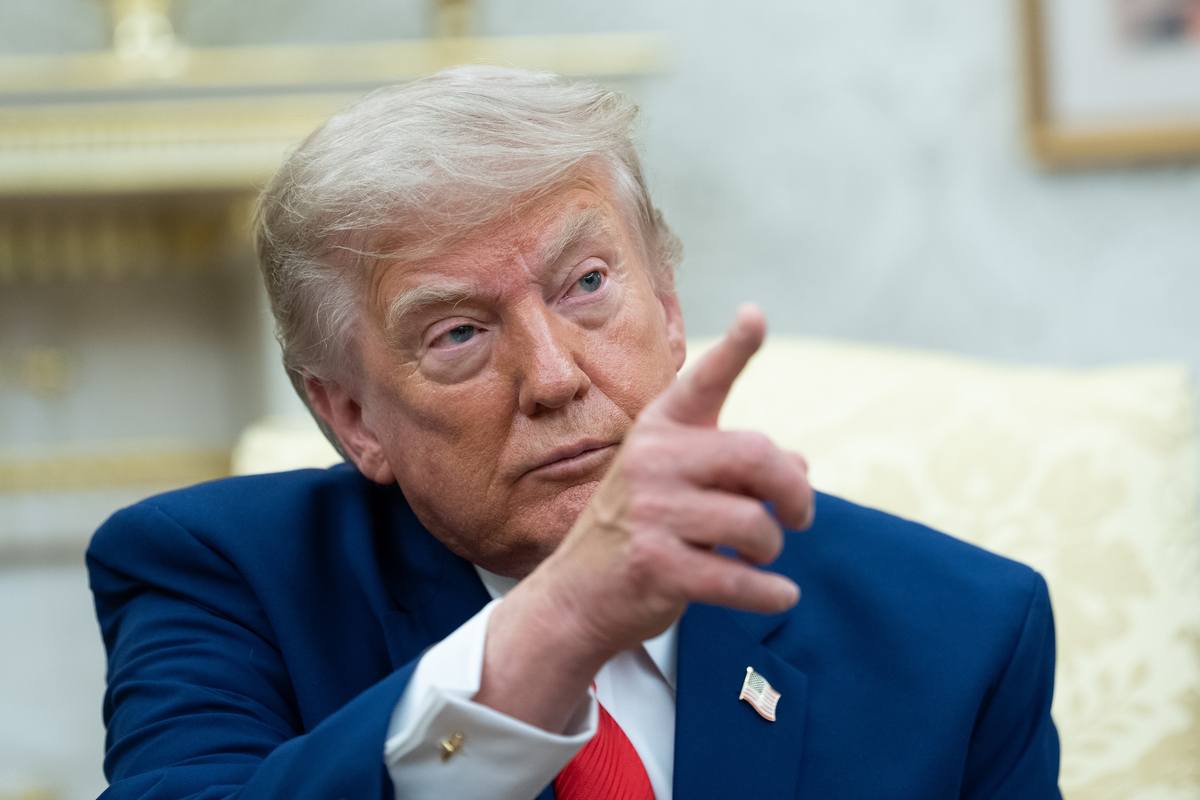
In response to China’s rapid pursuit in artificial intelligence (AI) technology, the administration of US President Donald Trump plans to intensively cultivate “star scientists.” The plan is to channel research and development (R&D) funding, which amounts to $200 billion (about 296 trillion won) a year, to individual scientists rather than to universities. The idea is to focus on profitable technologies such as AI rather than basic research, and to intensively distribute money to areas that can quickly show results. Attention is focused on whether this will shake the centripetal force of China, which is drawing in talent from around the world.
According to the Wall Street Journal (WSJ) on the 21st, the White House Office of Science and Technology Policy (OSTP), a presidential advisory body, said in a report that day that “we hope to prioritize programs such as fellowships or awards that provide opportunities to individuals rather than to universities,” stressing that “supporting individual scientists can accelerate the introduction of AI into scientific research.” According to the report, the new guidelines have individual researchers affiliated with universities receive funding directly, instead of the existing method in which universities receive and distribute research funds.
Michael Kratsios, the science and technology adviser, said, “For the past 20 to 30 years, we have been very stuck in the belief that we must continue to do the same research in the same way at the same institutions,” adding that “each agency should fund research that uses AI as a means of new scientific discovery.”
The Office of Science and Technology Policy, led by adviser Kratsios, coordinates science and technology policy across the administration and is involved in setting the federal government’s R&D budget through the White House Office of Management and Budget (OMB). Unlike the OMB, it does not have budget-drafting authority, but it has been raising its voice as the Trump administration strengthens the powers of its staff. This is why there is an interpretation that this report determines the direction of the roughly $200 billion in R&D budget that the federal government invests each year.
President Trump had a strong will to sharply cut the federal government’s R&D budget from the early days of his term. Major science agencies such as the National Institutes of Health (NIH), the National Science Foundation (NSF), the Environmental Protection Agency (EPA), and the National Oceanic and Atmospheric Administration (NOAA) were targets for reduction. The Trump administration even submitted a radical budget proposal to Congress that would cut the NIH budget by more than 30% and the NSF budget by more than 50%. However, since such attempts were repeatedly blocked in Congress, the administration has shifted the weight of its policy from reducing the scale to setting a new direction.
In particular, having the support that was given to each university go directly to individuals appears to be aimed at escaping university bureaucracy to induce faster results and expanding points of contact with the private sector. The NSF’s graduate student support program and the NIH’s research award for creative scientists are representative examples. In terms of support areas, the administration also decided to intensively invest in quantum computers along with AI.
The reason the US emphasizes fast R&D results is also a move mindful of the achievements of China’s star scientists. DeepSeek’s Liang Wenfeng (41), Moonshot AI’s Yang Zhilin (34), Zhipu’s Tang Jie (49), and MiniMax’s Yan Junjie (37) are the founders of the four major large language models (LLMs) drawing attention in the global AI industry. All are former researchers, and founder Yang graduated from Carnegie Mellon University in the US and received a courtship offer from Apple, but returned to China to start his business.
China is also actively recruiting overseas researchers, as when China’s Tsinghua University recruited Omar Yaghi, a Nobel Chemistry laureate and former UC Berkeley professor, on the 3rd to head an AI-based materials chemistry research center.
In the field of research AI, China has also overtaken the US for the first time. On “ResearchCloBench,” an international ranking that competes in autonomous scientific research capabilities, the research AI agent “Qiushi Engine,” developed by a Zhejiang University research team, ranked first, beating out the Massachusetts Institute of Technology’s (MIT) OpenScienceDesktop and Anthropic’s Claude Code.
China is also threatening the US in the field of pre-commercialization research. According to the “AI Index 2026” of Stanford University’s Institute for Human-Centered AI, China ranked first in the world in both AI paper output and citations. Yang Yihao, the Zhejiang University professor who led the research team, claimed, “This is the first case in which an AI agent system independently discovered a new physical mechanism that had not been previously reported and verified it through actual experiments.”…Read more by Park Si-Jin