September 4, 2026
Germany’s most dangerous man? AfD’s Ulrich Siegmund prepares for power
Powered by Yahoo Scout. Yahoo is using AI to generate key points from this article. This means the info may not always match what’s in the article. Reporting mistakes helps us improve the experience. Key takeaways Powered by Yahoo Scout. Yahoo is using AI to generate key points from this article. This means the info […]
Powered by Yahoo Scout. Yahoo is using AI to generate key points from this article. This means the info may not always match what’s in the article. Reporting mistakes helps us improve the experience.
Key takeaways Powered by Yahoo Scout. Yahoo is using AI to generate key points from this article. This means the info may not always match what’s in the article. Reporting mistakes helps us improve the experience.
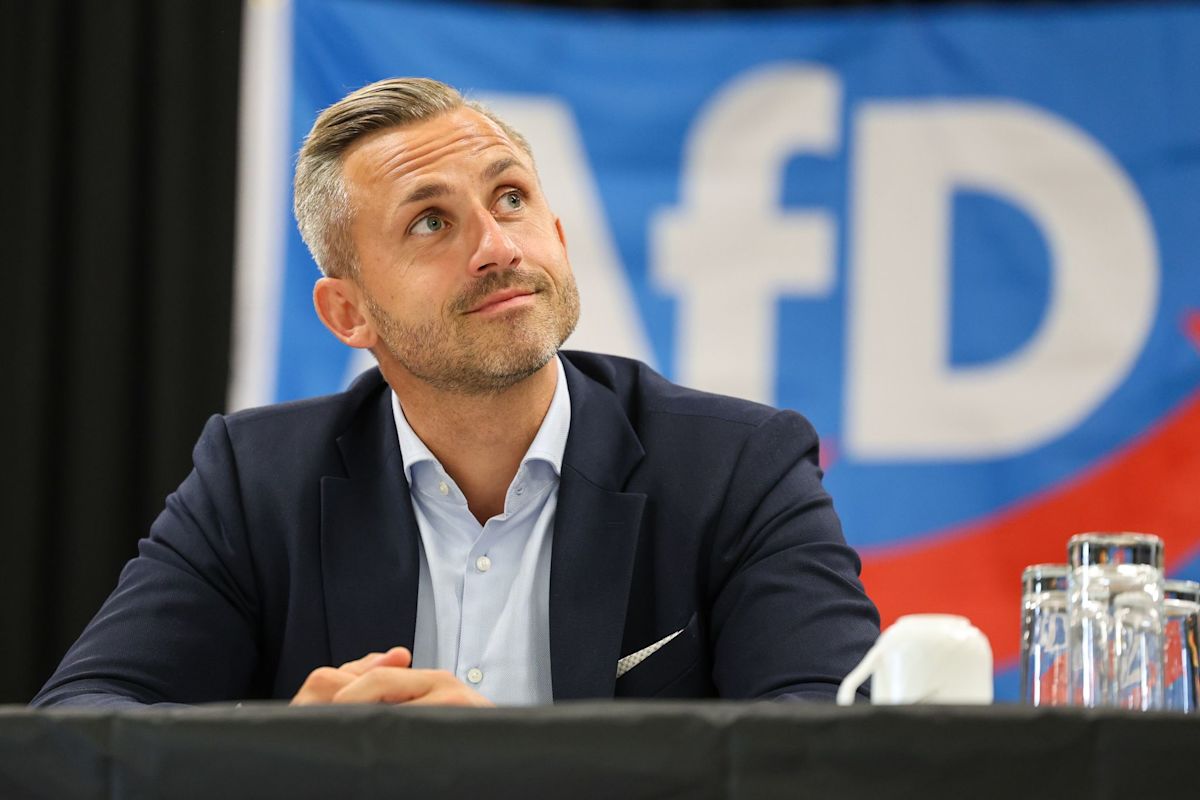
Ulrich Siegmund, the lead candidate for the far-right Alternative for Germany (AfD) in the eastern state of Saxony-Anhalt, has become a political sensation ahead of the closely watched election on September 6 – earning him the moniker of the country’s “most dangerous man.”
While many German politicians face anger and abuse on the campaign trail, Siegmund has drawn ever larger crowds this summer as his anti-immigrant party has surged beyond 40% in the polls.
Despite the AfD’s branch in Saxony-Anhalt being deemed a “confirmed” right-extremist movement, the party stands a serious chance of securing an unprecedented absolute majority in the state parliament in Magdeburg, allowing it to bypass the mainstream parties’ “firewall.”
This would make Siegmund the youngest ever premier of a German state, and the first from the far right since World War II.
Wherever the 35-year-old goes, the queues are long, with supporters waiting patiently for a photo. Videos of his campaign events are tightly produced for social media, showing Siegmund radiating positivity, fostering a sense of community, and greeting followers with hugs or a few kind words.
“Together, we will get our country back,” is his message. Concrete policy content is rarely on the agenda; when pressed, he retains a smile and evades answers.
The tag of “Germany’s most dangerous man,” given to him by the influential Der Spiegel magazine in an August front cover, has already become a source of pride for his supporters.
Born in 1990, the year of German reunification, Siegmund did not follow a conventional educational path for politicians.
As a teenager, he earned money as a waiter and a labourer on building sites, before beginning an apprenticeship as an export merchant.
Having earned a bachelor’s degree in business psychology and business administration at a distance-learning university in Hamburg, Siegmund later set up a business selling room fragrances and perfumes.
A member of the conservative Christian Democrats in his youth, he quickly left for the AfD and entered the state parliament in 2016.
His public prominence took a leap during the coronavirus pandemic, when his videos on social media criticizing lockdown measures earned him hundreds of thousands of followers.
He subsequently became co-leader of the AfD’s parliamentary group in Magdeburg in 2022 and was named lead candidate for Sunday’s election in May 2025 with over 98% support from party colleagues.
Siegmund came under serious scrutiny for the first time after it was revealed he attended an infamous meeting in Potsdam in November 2023 at which Martin Sellner, the former figurehead of the far-right Identitarian Movement, spoke about the “remigration,” or forced resettlement, of immigrants.
The Saxony-Anhalt state parliament subsequently removed Siegmund as chairman of its social affairs committee.
He was also caught up in a nepotism scandal that broke earlier this year. According to media reports, his father reportedly received more than €7,500 ($8,700) per month as a parliamentary staffer for a party colleague, one of a number of prominent AfD politicians whose relatives have been employed at the taxpayer’s expense.
Siegmund tried to deflect the resulting criticism by arguing that the party can only rely on people it trusts. The affair seems to have left behind little impression on voters.
Siegmund and his wife Julia live with their young daughter in the small town of Tangermünde, on the Elbe River. In his spare time, he goes to the gym; another of his hobbies was metal detecting.
On the campaign trail, Siegmund often presents himself as more moderate than the party’s controversial manifesto – although he does not distance himself from his radical colleagues.
At information stands on market squares and in public dialogues, he conveys the feeling that only “common sense” is needed to see the prevailing situation in Germany on issues such as migration, energy policy or public media as deeply troubling.
There is no question the AfD has benefited from public frustration with the mainstream parties, with a fresh wave of inflation linked to the war in Iran only adding to concerns.
The polls suggest social media-savvy Siegmund has been able to capitalize on the discontent. And power, suddenly, lies within his grasp.…Read more by DPA