September 7, 2026
Boy with rare genetic condition meets donor whose bone marrow saved his life
BIRMINGHAM, Ala. (WBRC/Gray News) – A 5-year-old Alabama boy met the bone marrow donor who saved his life for the first time. Dewontis Groomster Jr.’s father, Dewontis Groomster Sr., said he knew something wasn’t right when his son was a baby. The signs were subtle at first: a bruise, a change in behavior. “He kept […]
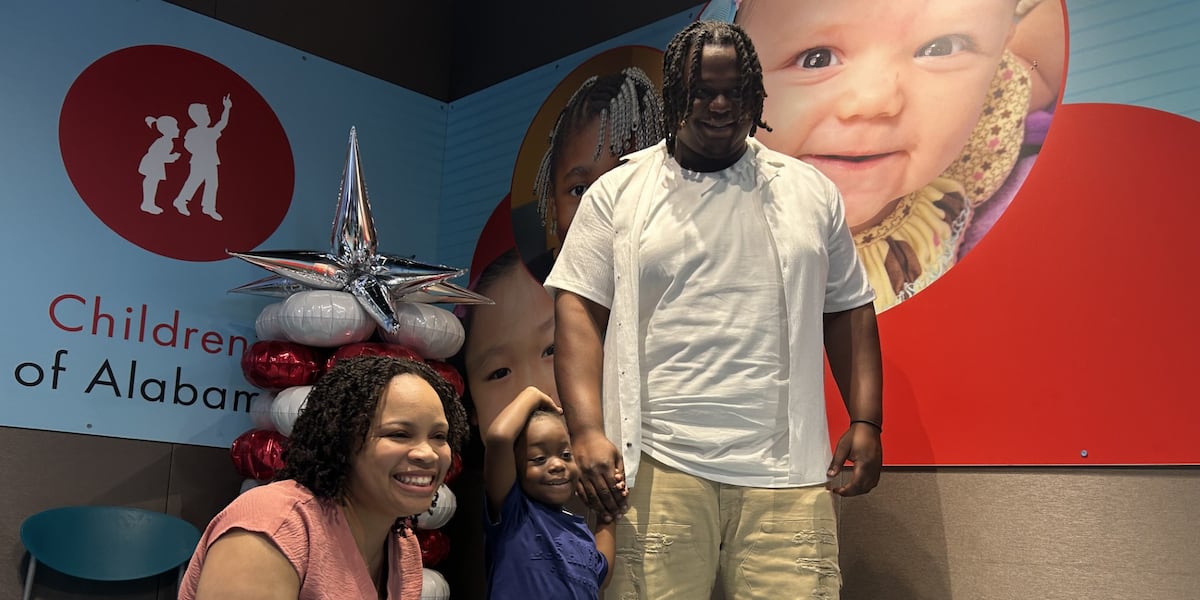
BIRMINGHAM, Ala. (WBRC/Gray News) – A 5-year-old Alabama boy met the bone marrow donor who saved his life for the first time.
Dewontis Groomster Jr.’s father, Dewontis Groomster Sr., said he knew something wasn’t right when his son was a baby. The signs were subtle at first: a bruise, a change in behavior.
“He kept getting bruises and not acting like normal,” Groomster Sr. said. “We kept going to the hospital in Montgomery. They kept saying he was fine, but he started having discoloration, so we got sent up to Birmingham.”
For the first two years of Dewontis’ life, the family went from doctor to doctor and diagnosis to diagnosis, according to Children’s of Alabama. Children’s of Alabama began evaluating the cause of the boy’s low platelet count before having to admit him for nephrotic syndrome, a kidney condition that causes excessive protein loss in the urine and severe swelling.
That prompted the medical team to expand the diagnostic workup. Genetic testing found the cause of his symptoms: Wiskott-Aldrich Syndrome (WAS).
Wiskott-Aldrich Syndrome is a rare genetic condition that affects the function of a child’s immune system, according to the Cleveland Clinic. It can cause issues with blood clotting, leading to excessive bleeding; frequent infections through its impact on white blood cells; and eczema. Medical officials said it’s linked to the X chromosome and primarily affects boys and men. An estimated three per million men are diagnosed with Wiskott-Aldrich Syndrome, equaling less than 5,000 people in the U.S.
Because Wiskott-Aldrich Syndrome is present at birth, it’s often diagnosed in infancy or early childhood after symptoms begin to appear, according to Children’s of Alabama.
Once Dewontis’ diagnosis was confirmed, he was referred to a doctor and pediatric blood and marrow transplant team at Children’s of Alabama to discuss the next step.
By the time Dewontis was 3 years old, doctors determined a bone marrow transplant offered his best chance at a healthy future, according to Children’s of Alabama. Before the transplant, he underwent chemotherapy to wipe out his existing bone marrow and immune system.
“His body went crazy with it,” Groomster Sr. said. “His tongue swelled so severely that he lost the ability to speak. He didn’t talk for about six months because of it.”
The swelling made it impossible for Dewontis to eat normally. Doctors inserted a feeding tube, and there were concerns his airway could become compromised. For months, father and son lived inside the hospital.
Dewontis spent seven months at Children’s Hospital in all. Children’s of Alabama said that one morning, the swelling subsided and he began to recover. He now spends his days playing football and basketball.
Dewontis had never met the person who donated the bone marrow used to help him survive. His donor, Carolyn Daniels, is from Oklahoma. Children’s of Alabama organized a time for the two to meet.
“It feels amazing,” Daniels told WBRC. “I know I’ve never met him before today, but…I feel like I know him.”
Daniels said she would make the choice again to be a donor.
September is Childhood Cancer and Sickle Cell Awareness Month. According to Children’s of Alabama, 18,000 patients are diagnosed every year with life-threatening blood cancers or other diseases for which a blood stem cell transplant may be their best hope for a cure.
Children’s of Alabama said 75% of those patients don’t have a fully matched donor in their family. The Alabama Center for Childhood Cancer and Blood Disorders encourages people to join the donor registry. People must be between the ages of 18 and 35 to be part of the registry. Anyone can order a free swab kit and join.…Read more by Elise Kidd, Gray News staff