October 23, 2026
Political Skirmishes in “Other Desert Cities” and “A Bright Room Called Day”
The primary problem is, unfortunately, Lily Rabe, who plays Brooke in a different, blunter register than everyone else onstage. I’ve seen Rabe give beautiful, varied performances, from her dignified Hermione in this past summer’s “The Winter’s Tale” to her demon-possessed nun in “American Horror Story,” gyrating saucily to “You Don’t Own Me.” In “Other Desert […]
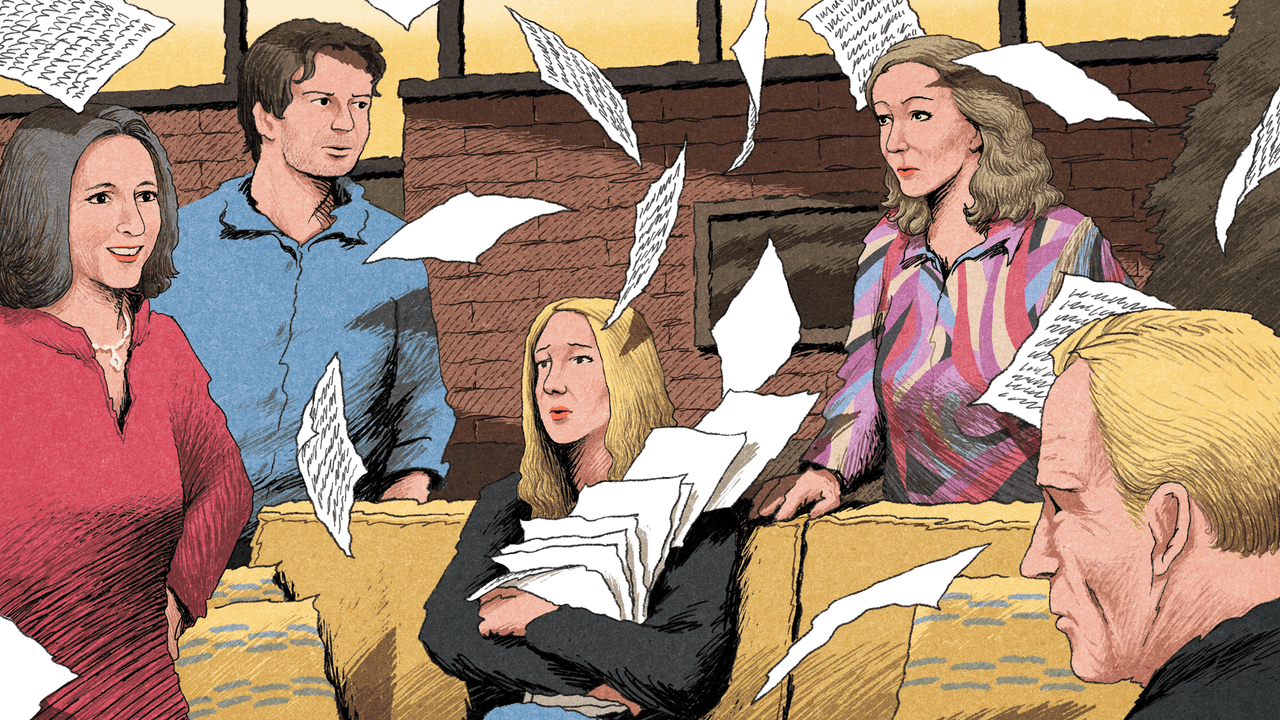
The primary problem is, unfortunately, Lily Rabe, who plays Brooke in a different, blunter register than everyone else onstage. I’ve seen Rabe give beautiful, varied performances, from her dignified Hermione in this past summer’s “The Winter’s Tale” to her demon-possessed nun in “American Horror Story,” gyrating saucily to “You Don’t Own Me.” In “Other Desert Cities,” she’s all sulk and grimace. To be fair, it’s a hard role: Brooke is a solipsistic bummer, a frustrated writer who spends months in a mental hospital being tended to by her mother, then ambushes her with a score-settling tell-all. Instead of seeming righteous but flawed, Rabe’s Brooke validates Polly’s harsh judgment that she’s a reckless brat convinced her truth is the only truth. When, in the final act, a twist reframes the Wyeths’ behavior as, if not fully sympathetic, more understandable, it just made me furrow my brow. By then, it was hard to imagine Brooke’s parents opening up and easier to imagine them manipulating her—defusing, by any means necessary, their daughter’s incendiary literary device.
Even so, I had fun. I loved every costume and considered trying to dress more like a Palm Springs Republican, as Polly would want me to. And there was even, perversely, a touch of escapism to the experience. “Other Desert Cities,” so topical in 2010, now feels as if it were written in the Paleolithic era. If the Wyeths are monsters, they’re also dinosaurs, eclipsed by the nihilists who followed. There’s a wonderful moment when Harris puts on a show, mimicking the death scenes he specialized in onscreen: he buckles at phantom gunshots, then mimes shock, his torso atilt. It was his one true skill, Lyman says, modestly, with a Reaganite twinkle—he always knew how to make an exit.
Two nights later, I went to Crown Heights to catch a revival of a play that felt much more timely, despite having débuted in 1987 and being set in the nineteen-thirties. A tiny, passionate production of Tony Kushner’s “A Bright Room Called Day,” directed by Rachel Gita Karp, was being staged in a town house in the heart of Brooklyn’s so-called Commie Corridor, which helped steer Mayor Zohran Mamdani to victory. As I reclined on a sofa, sipping rosé, a cadre of Berlin bohemians—Reds, fellow- travellers, anarchists, and homosexuals; actors, socialist-realist painters, and writers—began celebrating New Year’s Eve, 1932, at a kitchen table just a few feet away. Lifting glasses of champagne, they toasted, giddily, to “health, happiness, and relative safety on this fierce and splendid night and for many years to come.” It flashed me back to nights of political hope in recent decades, and I felt sick.
“Day” is Kushner’s début—his early problem play, which premièred, in San Francisco, four years before “Angels in America.” At the time, the project felt hyperbolic, largely because of the finger-wagging interventions of Zillah, a modern-day punk anarchist who ranted about Reagan as a new Hitler. (With “Angels,” Kushner found a more fruitful comparison: Roy Cohn and the Red Scare.) Zillah’s speeches have since been reworked, most notably in a 2019 production in which a Kushner-y character called Xillah debated her, framing the story with an anxious meta-narrative. By then, the Hitler comparisons had a different feel: if Kushner had once been the boy who cried wolf, the wolf was at the door.
In 2026, the gemlike Brooklyn venue lent Kushner’s project a magical quality, turning the audience into ghosts from the future, eavesdropping on the fall of the Weimar Republic but unable to intervene. There was no meta frame, and although Zillah still chimed in, it was in smaller doses—and the truth is, we no longer needed her guidance. As the characters playfully debated the rise of Fascism, the dialogue often felt transcribed from some Brooklyn polycule. Is class the best lens for understanding Hitler’s appeal, or is daddy worship? Can anything be learned from sleeping with Nazis? When, ultimately, is it time to flee? The cast was excellent, particularly a sad, sexy Molly Rose Heller as Agnes, a movie actress clinging to her perfect Berlin rental, Jonathan Bock as her Trotskyite beau, a poignant Portal Rose as a sexual adventurer, and Aja Downing as a morally malleable starlet toying with working for the Reich.…Read more by Emily Nussbaum