October 31, 2026
Canadian Snowbirds In The U.S. Face $5,000 Fine Over Registration Proof Rule
Canadian snowbirds planning on spending the winter in the United States must now adhere to a federal law in full or risk fines or even imprisonment. The Alien Registration Act has long required non-U.S. citizens to register with the U.S. government for stays of 30 days or more; however, it was rarely enforced on Canadian […]
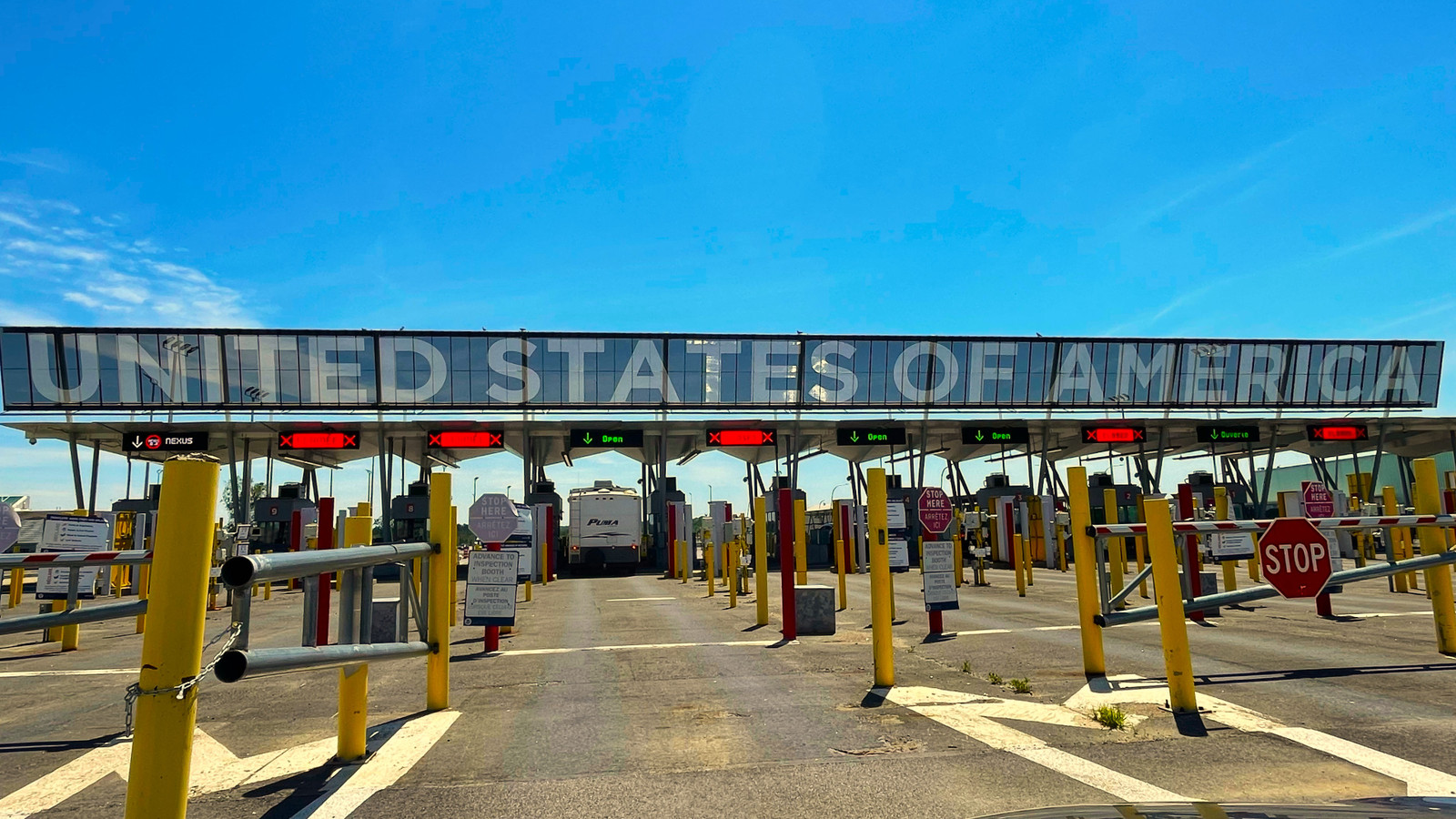
Canadian snowbirds planning on spending the winter in the United States must now adhere to a federal law in full or risk fines or even imprisonment. The Alien Registration Act has long required non-U.S. citizens to register with the U.S. government for stays of 30 days or more; however, it was rarely enforced on Canadian snowbirds.
The Trump administration tightened enforcement in April 2025, which caught some Canadian snowbirds off guard when they were fingerprinted and charged registration fees at the border. But this law requires more than just registration; running afoul of registration proof rules can land Canadians with a fine of up to $5,000 USD and/or 30 days in jail (and it’s not the only requirement that can spark fines or time in a prison cell).
Canadian Snowbirds Must Adhere To U.S. Registration Proof Rule
The Alien Registration Act of 1940 isn’t new, but its enforcement for Canadians is. Under it, Canadians, including snowbirds who own or rent vacation homes in the U.S., must register with the American government for stays of 30 days or longer. Enforcement was scarce before President Trump’s second term, but his executive order on April 11 ended that leniency. Every Canadian aged 14 and over staying in the country for 30 or more days must now register, submit to fingerprinting, have their photograph taken, and pay a $30 fee.
Frequent travelers to the U.S. may already know that failure to register may incur heavy fines and possibly prison time. However, lesser-known violations can also trigger up to $5,000 fines, 30 days in jail, or both. One such infraction that can easily catch Canadian snowbirds unawares during their long stay is failure to carry registration proof papers at all times (or rather, a card).
According to the U.S. Citizenship and Immigration Service (USCIS), “Once an alien has registered and appeared for fingerprinting (unless waived), DHS will issue evidence of registration.” That proof may come in the form of a “certificate of alien registration or an alien registration receipt card,” U.S.C. 1304 states. Unknown to many Canadians, though, is that the law requires “aliens over the age of 18 [to] carry and keep in their personal possession at all times.”
The agency adds that “It is the legal obligation of all unregistered aliens (or previously registered aliens who turn 14 years old) who are in the United States for 30 days or longer to comply with these requirements.” Under DHS’s updated Immigration and Nationality Act (INA § 262 / 8 U.S.C. § 1304), those penalties can reach either or a combination of the following:
DHS also posted a Federal Register notice that affirms the ruling, although it shared interesting commentary from the public during finalization. It said one commenter raised concerns that possessing proof of registration at all times “would disproportionately harm survivors of violence who may be fleeing abuse or whose abusers control their documentation as a means of maintaining power and control.”
Still, the ruling stands, and the reason for it boils down to national security, according to the Homeland Security Secretary at the time of its initial re-enforcement on Canadians,
Furthermore, carrying registration proof isn’t the only rule spurring fines or jail time for Canadian snowbirds who fail to comply.
Carrying proof of registration is the second part of the law. But Canadian snowbirds who fail to register in the first place can be an even more serious matter, leading to not only thousands in fines but also lengthier jail time. For snowbirds who willfully evade registration, a fine of up to $5,000 USD awaits. Plus, six months in prison is possible, as opposed to just 30 days for failure to carry registration evidence.
On top of that, a change-of-address rule can also spark fines, or even deportation for severe violations. Canadian snowbirds visiting the U.S. for long periods may well end up changing where they stay at some point. No matter what, snowbirds must notify USCIS of any change of address “within 10 days of moving,” both the USCIS and U.S. Embassy & Consulates in Canada warn.
Failure to report a change of address is a “misdemeanor punishable by a fine of up to $5,000 or imprisonment for not more than 30 days, or both.” If a Canadian snowbird avoids informing the agency on purpose, though, DHS could deport them.
Fortunately, snowbirds can easily update their address on the USCIS website. Given the many rules within the Alien Registration Act, snowbirds must ensure they understand and adhere to what’s required of them if they want to avoid such consequences. Granted, enforcement on Canadians is new as of last year, but “not knowing” is generally not an acceptable excuse. Some Canadians have found that out for themselves already, particularly when enforcement renewal began.
The Alien Registration Act Has Caught Unknowing Canadian Snowbirds Off Guard
A Canadian snowbird couple interviewed by CBS News last October were caught off guard on their trip to the U.S. after the law began being enforced on travelers from Canada. They were fingerprinted, photographed, and charged $60 ($30 per person) on entry into the United States at the Peace Arch Border Crossing between Surrey, B.C., and Blaine, Washington.
The couple, Jacquie and Steve Ree, said they were sent to secondary inspection where U.S. Customs and Border Protection (CBP) conducted a search of their motorhome.
After a 1.5-hour wait, the couple said they were permitted to cross the border. Mrs Ree told the outlet she said the fee was a “bit of a money grab,” and described the process as frustrating because she felt CBP officers didn’t seem to know how the Alien Registration Act process worked and whether it applied.
Furthermore, a recent change to the Alien Registration Act for Canadians caused more confusion. In August, the Canadian Snowbirds Association (CSA) published a news release in August citing that the U.S. had eased the rules for certain NEXUS members who meet specific criteria.
The USCIS updated its guidance on the U.S. alien registration requirement affecting Canadian snowbirds who use NEXUS to travel to the U.S., as well as other Trusted Traveler Programs.
The new guidance now deems travelers who were last admitted through Trusted Traveler Programs, including NEXUS, SENTRI, FAST, and Global Entry, as already registered with the U.S. government. However, Canadians should note that the rule only applies to visitors who were last admitted to the U.S. through NEXUS or a qualifying Trusted Traveler Program. Canadians with NEXUS membership alone aren’t considered already registered.
Additionally, another alert from the CSA came in September; it warned snowbirds against packing Canadian products for their stays in the U.S. The advice came following a ban on certain Canadian imports, notably food, alcohol, and agricultural products. CBP may confiscate these items from snowbirds as they enter the U.S.
Ultimately, now that around a year and a half has passed since the U.S. registration enforcement on Canadians began, snowbirds traveling to the U.S. for winter 2026 shouldn’t get caught out by registration requirements, as they’ve had more than enough time to become familiar with the rules.
But even so, rules, fines, and potential prison time for violations, combined with the continued tensions over U.S. boycotts and tariffs and President Trump’s repeated “51st state” rhetoric, will Canadians stay loyal to their winter stays south of the border this year?
Couple that with the health state of emergency in Florida, which could leave Canadians with insurance issues following Canada’s October 15 travel advisory for the popular snowbird state. In any case, the next few months will address that elephant in the room.…Read more by Lauren Feather