May 23, 2026
KHRN: Political executions surge in Iran; fears grow for Kurdish prisoners
At least 36 prisoners have been executed in Iran over the past two months, coinciding with the US-Israeli military conflict with Iran and continuing even after the ceasefire. Even as the Islamic Republic pursues negotiations with the United States aimed at a permanent end to the war, it has continued its repressive policies at home, […]
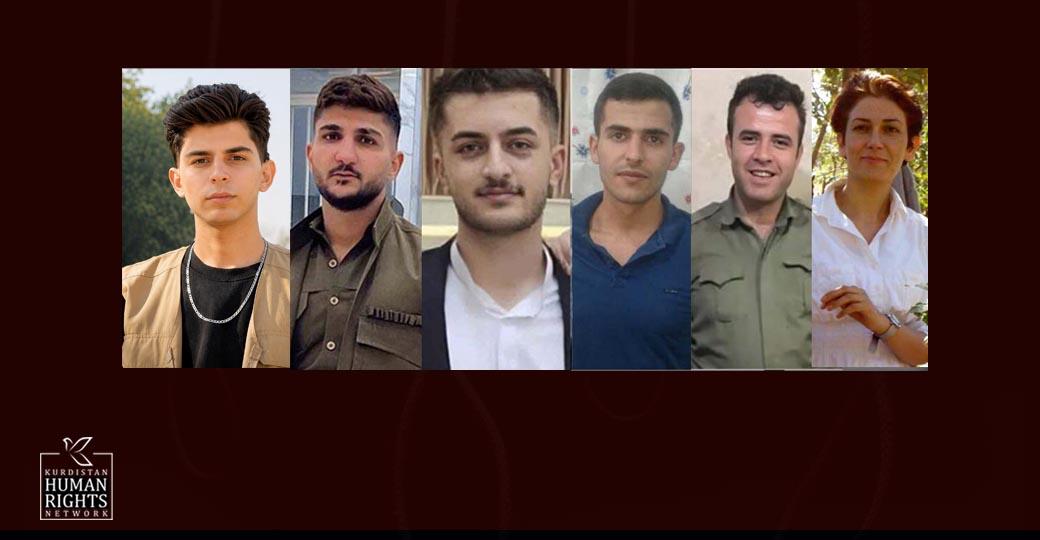
At least 36 prisoners have been executed in Iran over the past two months, coinciding with the US-Israeli military conflict with Iran and continuing even after the ceasefire.
Even as the Islamic Republic pursues negotiations with the United States aimed at a permanent end to the war, it has continued its repressive policies at home, executing prisoners on political and “security” charges throughout this period.
The escalation in executions, alongside a widening security crackdown and an extensive internet blackout, has sharply intensified concerns about the situation of political prisoners already sentenced to death, as well as detainees at risk of receiving death sentences.
Although capital punishment has throughout the Islamic Republic’s 47-year existence served as one of its primary instruments of control to suppress dissent and instil fear across society, the number of political executions carried out within so compressed a timeframe is regarded as almost without precedent since the 1980s.
Nine were convicted on charges of membership or collaboration with the People’s Mojahedin Organization of Iran (PMOI); two on charges of membership of the Democratic Party of Iranian Kurdistan (PDKI); two on charges of affiliation with Jaysh al-Adl and Ansar al-Furqan; six on charges of espionage for Israel; and two Iraqi Arab nationals on charges of spying for an Arab state.
The cases of Verisheh Moradi (Wirishe Moradi), Ali (Soran) Ghassemi, Pezhman Soltani, Kaveh Salehi, and Rezgar Beigzadeh Babamiri have been referred back to branches of the Islamic Revolutionary Courts in Tehran and Mahabad for retrial following the annulment of their death sentences by the Supreme Court.
Pakhshan Azizi, a women’s rights activist and social worker from Mahabad, was arrested in Tehran in August 2023. After months in solitary confinement and denial of access to a lawyer, she was sentenced to death on charges of “armed insurrection” (baghi). Her sentence was upheld by the Supreme Court and her retrial request rejected. She is held in the women’s ward of Evin Prison, Tehran.
Hatem Ozdemir, a Kurdish political activist holding Turkish citizenship, was arrested in 2019 and subjected to torture during interrogation. His death sentence on charges of “armed insurrection” (baghi) was upheld by the Supreme Court after several rounds of review, and his retrial requests have been rejected multiple times. He is held in the political prisoners’ ward of Orumiyeh Central Prison.
Yousef Ahmadi, from Baneh, was arrested in April 2020. He was tortured and denied access to medical care before being sentenced to death on charges of “armed insurrection” (baghi). His sentence has been upheld by the Supreme Court and his retrial request rejected. He is held in Sanandaj Central Prison.
Rauf Sheikh-Maroufi, Mohammad Faraji, and Mohsen Eslamkhah – all from Bukan – were arrested in connection with the “Women, Life, Freedom” uprising in the city on 26 December 2022, 22 February 2024, and 2 August 2025, respectively. After months of torture in detention, all three were sentenced to death on charges of “spreading corruption on earth” (efsad-e fel-arz) by Branch One of the Islamic Revolutionary Court in mid-February 2026. Their cases have been referred to the Supreme Court on appeal, but no information regarding their current status has been made public. All three remain in Bukan Prison.…Read more by KHRN