September 8, 2026
Law proposed to require online sellers of active mobility devices to display warning notices
The Bill will also introduce key measures to further strengthen controls against deregistered vehicles. The Bill will also introduce key measures to further strengthen controls against deregistered vehicles. Online sellers of active mobility devices must display warning notices on the device and usage rules, and cannot advertise and sell non-compliant active mobility devices. Add CNA […]
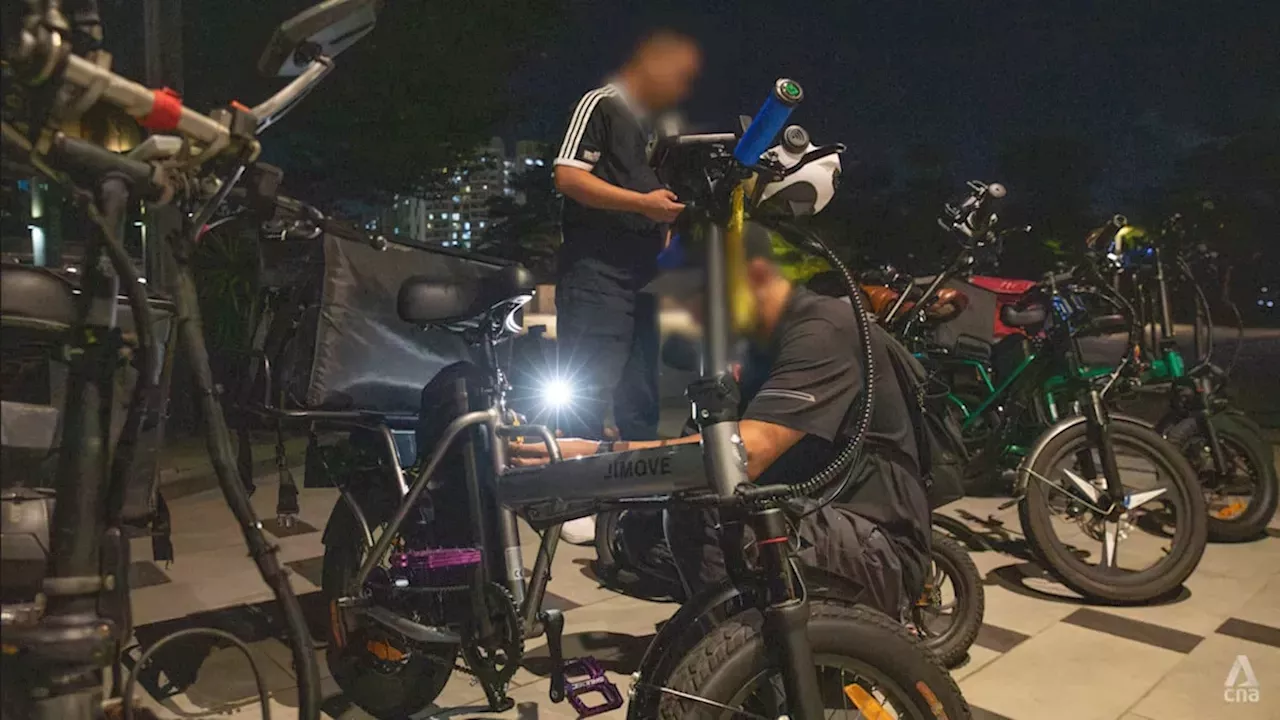
The Bill will also introduce key measures to further strengthen controls against deregistered vehicles.
The Bill will also introduce key measures to further strengthen controls against deregistered vehicles. Online sellers of active mobility devices must display warning notices on the device and usage rules, and cannot advertise and sell non-compliant active mobility devices.
Add CNA as a trusted source to help Google better understand and surface our content in search results. SINGAPORE: Online sellers of active mobility devices could be required to display warning notices on the device and usage rules, under a new Bill tabled in parliament on Tuesday .
Introduced by the Ministry of Transport , the Land Transport and Related Matters Bill proposes legislative amendments to the Active Mobility Act 2017, Electric Vehicles Charging Act 2022, Road Traffic Act 1961, and Small Motorised Vehicles Act 2020. The new legislative provisions are intended to empower LTA to further strengthen controls against deregistered vehicles and expand the scope of existing active mobility regulations.
The Bill will also allow MOT to streamline processes, facilitate industry innovation for electric vehicle charging, enhance safety for EV charging and facilitate the continued safe deployment of autonomous vehicles in Singapore. With the Bill, MOT will extend the powers and restrictions imposed on physical retail premises to online sales and advertising platforms. Online sellers of active mobility devices must display warning notices on the device and usage rules, and cannot advertise and sell non-compliant active mobility devices.
To protect consumers from unknowingly buying non-compliant devices, the Bill will also prohibit false or misleading representations about the compliance of a device or its components, as well as advertising for illegal modification services. The Bill will also introduce safety rules to reduce fire risks arising from batteries in active mobility devices. Sellers of mobility device batteries must display specification notices with details of the battery, such as compatible device models, voltage and capacity.
It would also be an offence for sellers to advertise or sell a non-compatible battery for use in a personal mobility device , power-assisted bicycle or mobility vehicle, or to fit or use a non-compatible battery in such devices, MOT said. To further deter the illegal import of non-compliant PABs and motorised PMDs, the Bill will increase penalties under the Small Motorised Vehicles Act.
The maximum penalty for an individual would be increased from a fine of S$5,000 or up to six months’ jail or both, to a fine of up to S$10,000 or up to 12 months’ jail or both.
“Penalties are doubled for repeat offenders. This aligns with that of similar offences under the Active Mobility Act for illegal modification and sale of non-compliant devices,” MOT said. In recent years, online channels have become an increasingly common means of advertising and selling active mobility devices and their batteries, added the ministry.
“The use of batteries that are not compatible with the devices in which they are fitted may also pose fire safety concerns. These developments underscore the need to strengthen safeguards for online sales and battery compatibility.
“To further strengthen controls over the disposal of deregistered vehicles so they do not end up on Singapore’s roads, the Bill would implement an authorised exporter scheme, which requires deregistered vehicles to be exported through LTA-authorised exporters. It would also shorten the grace period for owners of deregistered vehicles to fulfil disposal requirements from one month to 14 days.
The Bill would also ensure that offenders remain liable for prosecution for as long as they fail to fulfil the respective disposal requirements. The proposed law would also empower the government to prevent new or used vehicles from being registered by or transferred to high-risk individuals who are at risk of failing to dispose of the vehicles when they are deregistered.
Furthermore, it would criminalise the sale or supply of deregistered vehicles with the knowledge that, or reckless as to whether, the vehicle will be kept or used on Singapore’s roads.
“The government takes a strong stance against any persons using, keeping, buying or selling of deregistered vehicles for unlawful purposes,” MOT said. “Vehicle owners must ensure that deregistered vehicles are disposed of promptly and in accordance with LTA’s requirements. Firm enforcement action will be taken against offenders who fail to comply with the respective requirements.
“For EV charging, the Bill proposes to remove the mandatory two-yearly periodic inspection requirement for landed home EV chargers, reducing the compliance burden. “As a safeguard, LTA retains the power to require ad hoc inspections where safety concerns arise,” MOT said. The proposed law also allows LTA to presume that an EV charger is in use when it is connected to an EV or EV battery, facilitating enforcement against suspected unlawful or improper charging.
As for AVs, the Bill would extend the existing regulatory sandbox under the Road Traffic Act for AV deployments on roads to Dec 31, 2028.
“This is to ensure that ongoing AV deployments can continue undisrupted until a more holistic legislation is implemented,” MOT said. Modelled after this existing sandbox, the Bill further introduces a regulatory sandbox under the Active Mobility Act to facilitate AV deployments on public paths, for an initial five-year period, until Sep 30, 2031.
“This new sandbox will allow for the controlled testing and deployment of autonomous mobility solutions such as robosweepers, enabling the industry to gain operational experience and the government to refine the regulatory framework to support the safe and progressive scaling-up of such deployments,” MOT added. The Bill also introduced strengthened enforcement powers to deal with illegal point-to-point transport services. These enhanced powers would enable authorities to act more decisively against operators and people who offer unlicensed ride-hailing or taxi services.
“Even as we clamp down on the provision of illegal point-to-point services, we will ensure there are viable alternatives for commuters,” said MOT. Under the enhanced Cross-Border Taxi Scheme, the quota was increased from 200 taxis to 300 taxis since May 4. Authorities are looking to further increase the quota to 500 taxis from each country.
“While enforcement is currently focused on illegal operators and drivers, commuters should note that they may also be penalised for using such illegal services in future,” said MOT. “More immediately, commuters should be aware that unlicensed vehicles lack valid insurance coverage, which can have serious consequences for commuters in the event of an accident. ”
Similar News: You can also read news stories similar to this one that we have collected from other news sources.
Australia’s digital duty of care law would let social media users turn off algorithmsAustralia’s government plans a digital duty of care that would require big tech firms such as Meta to give social media users an opt-out from personalised algorithms, Communications Minister Anika Wells said. The proposal responds to concerns over addictive and extreme content and follows Australia’s world-first online safety crackdown for children.
Read more »
Warsaw Robots Parade for AI Regulation Ahead of Poland’s New AI LawA group of autonomous robots marched in front of Poland’s Ministry of Digital Affairs to push for AI regulation ahead of the national implementation of the EU AI Act. The demonstration, organised by Democratism, highlighted concerns about worker displacement and the need for oversight on evolving AI technologies.
Read more »
Singapore Draft Digital Infrastructure Bill Aims to Strengthen Security and Sustainability of Data CentresThe bill introduces new licensing regimes for data centres and cloud providers to improve energy efficiency and cybersecurity, giving operators a transition period to comply.
Read more »
New law proposed to ensure deregistered vehicles are kept off Singapore’s roadsFrom September, deregistered vehicles detected by police or LTA officers during their patrols will be wheel-clamped for seizure, the authorities announced on Sept 8, as a proposed law to keep such vehicles off roads here was put before Parliament. The Land Transport and Related Matters (No. 2) Bill outlines four key measures to enforce the timely and proper disposal of deregistered vehicles.
Read more »…Read more by ChannelNewsAsia