September 29, 2026
How To Tell If Meat Is Safe To Eat With 167,639 Pounds Being Recalled
You could say that this meat didn’t really exactly meet the requirements for safe consumption. A routine inspection revealed that lots of meat—meaning certain lots and also a lot of meat—hadn’t been properly inspected by the United States Department of Agriculture and bore labels that had false USDA marks of inspection. That’s a big no-no […]
You could say that this meat didn’t really exactly meet the requirements for safe consumption. A routine inspection revealed that lots of meat—meaning certain lots and also a lot of meat—hadn’t been properly inspected by the United States Department of Agriculture and bore labels that had false USDA marks of inspection. That’s a big no-no and resulted in Star Meat Delivery Inc.—a company based in Lucama, North Carolina—voluntarily recalling 167,639 pounds of various raw meat products, according to a USDA announcement. This raises an important question—how do you know if your meat is safe?
Well, any meat that falls among the 23 different products—including various beef, pork and goat ones—listed in recall announcement would not be safe to eat. Although these products did have labels that bore the inspection number “EST. 1363,” such an inspection number was never officially authorized. Thus any product with this inspection number “should be considered misbranded and unsafe to eat,” in the words of the USDA. And Star Meat Delivery had shipped these products to a Georgia-based distributor, A&D Foods, which then sent them retail and restaurant spots across the country. Therefore, if you are in the U.S. and about to consume some kind of beef, goat or pork dish like pork butt, you may want to get off your butt and double-check whether the original product made the recall list. The recall has been classified as a class I one—which is the highest class in a bad way, in a highest health risk way. This means that using the product—which in this case presumably means eating it—brings a “reasonable probability” of “serious, adverse health consequences or death,” in the words of the USDA. Naturally, you probably don’t want to do anything where there’s a reasonable probability of death. Such a probability is there because meat that has not been properly inspected could have all sort of badness in them. You could have bad bacteria, pesky parasites or other sorts of malicious microbes. There’s also the possibility of undeclared allergens and other types of contaminants like foreign bodies. Fortunately, there have been no confirmed reports of illness or injury so far.
Know Where The Meat Originated This brings up one way you should check your meat—check to see where it came from and whether it’s from a reputable source. That means looking for inspection labels and the supplier name on the packaging. If you are carrying a smartphone—you know that thing that you watch TikTok videos with—you can then quickly use the device to check whether the supplier has had any reported issues. Don’t assume that just because some meat has made it to the grocery store, that it’s been properly checked along the way. It can be a little harder to suss out the source if the meat is from a restaurant or some other type of eating establishment. In such places, you probably aren’t being served the meat in its original packaging, which would be kind of weird. Nevertheless, you could politely ask those staffing the establishment where they get their meat. This is something that they should be able to readily tell you. Any type of hemming or hawing could be a red flag. It’s also a good idea to stay up-to-date on food warnings and recalls, as well as all the food-borne illness outbreaks that have been occurring. That can help alert you to what you should be careful with and avoid. If you’re worried that you can’t “meat” this expectation, consider how much time and effort you may be spending tracking other types of news, such as, for example, what celebrity is wearing what or saying what.
When checking the package, also be aware of any potential damage such as tears or leaks. Any compromise to the packaging could allow microbes or foreign bodies to enter the meat. If the packaging is swollen, that could be sign of gas production suggesting the presence of some bad microbes. Any abnormality of the package should prompt you to either return the meat or throw it away.
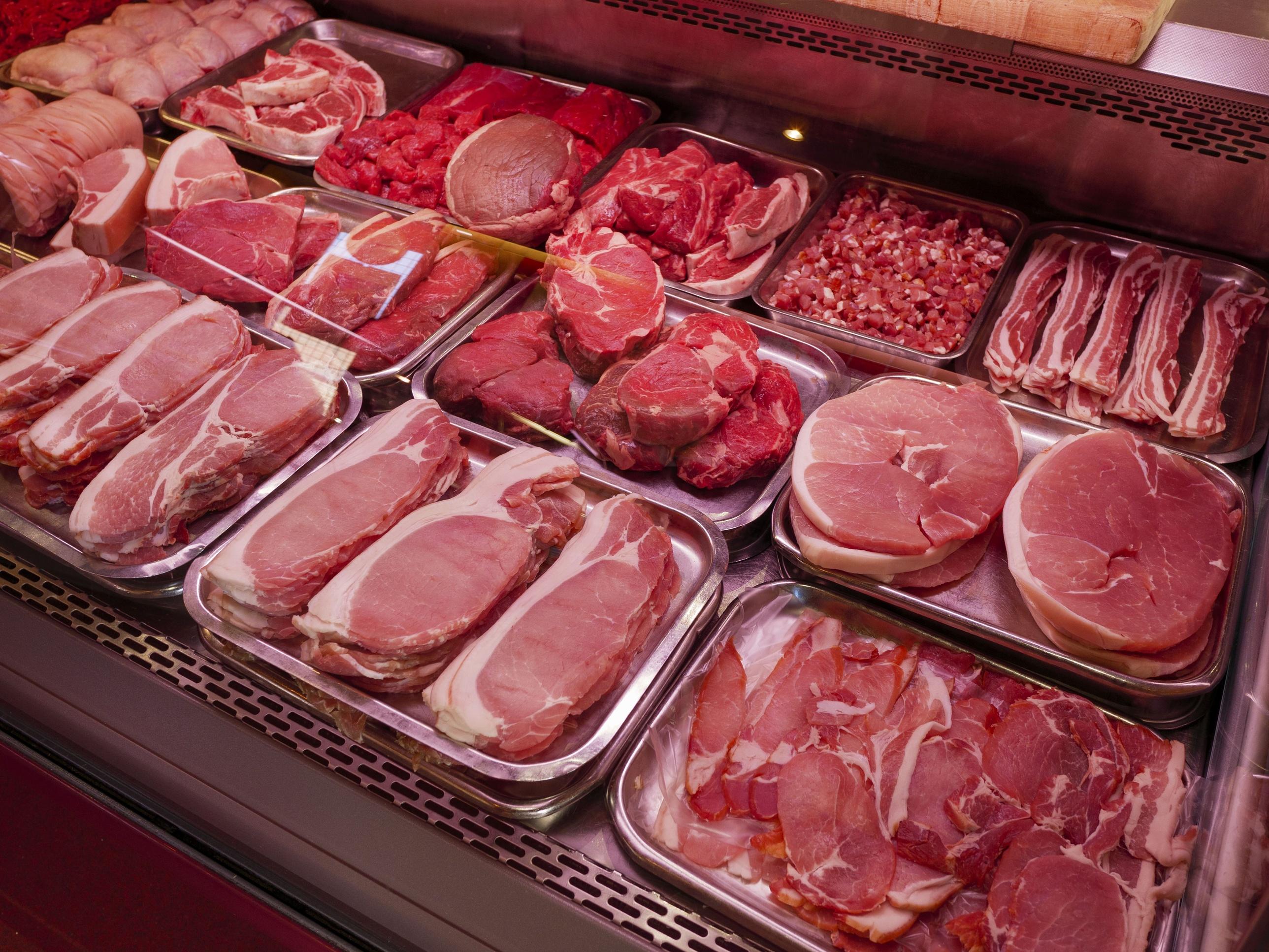
Check The Color Of The Meat Another way to check your meat is to check its color. When it comes to raw pork and poultry, think another “P”—meaning that both should be pink in color, although poultry tends to be a paler pink. Raw beef should be red. Slight browning from exposure to oxygen can be acceptable. Meanwhile, raw goat meat can range from a light pink to a bright red. Any other color should raise suspicion. “Sam I Am” may have liked green eggs and ham but green, yellow, gray or blue should be signs to throw out your meat. That applies to both raw and cooked meat unless dyes are somehow introduced.
Give your meat a whiff, too. There shouldn’t be more than a rather mild, neutral or no more than slightly metallic scent. Opening a vacuum-sealed meat package could release for a moment a mild, egg-like odor. However, this odor should soon dissipate. Any stronger more persistent odor should raise suspicion—especially if it’s offensive and putrid like that of ammonia or sulfur. If you find yourself gagging when sniffing raw meat, don’t say, “Oh, maybe I should cook this to make the odor go away before I eat it.” Cooking meat might kill bad bacteria in the meat but may not get rid of the toxins that are left over. Certain types of Escherichia coli, for example, can produce dangerous toxins, for example, as I’ve detailed before in Forbes.
There’s another sense that you can use to evaluate your meat. And no it is not hearing. The meat is not going to sing that Joss Stone song, “Spoiled.” No the sense here is touch. Raw meat should feel firm and slightly moist. Spoiled meat on the other hand might feel slimy, slippery, sticky, mushy or spongy. Feeling the meat might be able to detect foreign bodies as well. Of course, just because your meat looks, smells, feels and even tastes (after it’s cooked) fine, doesn’t guarantee that the meat is safe to eat. Dangerous microbes can still go unnoticed. So can allergens and different contaminants. That’s why having a proper functioning meat inspection system is so important. Such an inspection system should not only check the meat but also the processes by which the meat is obtained, stored, packaged and shipped. Only then might meat meet the expectations of safety.…Read more by Bruce Y. Lee